
 NAGAON, (MExN): UCO Bank on Monday organised a Resource, MSME, Retail and Agriculture Carnival at Hotel Rishiraj in Nagaon as part of its nationwide outreach campaign. Chinmay Kumar Sahu, Deputy General Manager from the bank’s Head Office in Kolkata, attended the programme as the chief guest. Branch managers from Nagaon and nearby areas, along with existing and prospective customers, participated in the event aimed at extending loan support to eligible individuals and businesses to promote entrepreneurship and local economic growth. Zonal Manager Narendra Pratap Singh inaugurated the programme with a welcome address, thanking the chief guest and customers for their participation. He said UCO Bank remained committed to serving customers across the Jorhat Zone and highlighted the importance of cyber-security awareness. Singh briefed attendees on the bank’s achievements and vision, stating that the bank is dedicated to the socio-economic development of Assam. Under the ongoing campaign for the 2025–26 financial year, the Jorhat Zone has sanctioned loans worth over Rs 485 crore to 7,150 beneficiaries, he added. Deputy Zonal Head Hassan Ejaz Hashmi outlined features of UCO Home Loan, UCO Car Loan, UCO Property Loan and UCO Education Loan. Amit Kumar, Head of the MSME Hub, highlighted new MSME financing schemes including UCO Unnati, UCO Vahan, UCO Yuva Shakti, UCO Nari Samman and UCO Abhinandan. He said strengthening the MSME sector was essential as it generates significant employment and contributes to the nation’s economic and social progress. Addressing the gathering, Deputy General Manager Chinmay Kumar Sahu apprised customers of the bank’s performance in 2025–26, noting deposits of over Rs 3.05 lakh crore, advances exceeding Rs 2.30 lakh crore and total business of more than ₹5.36 lakh crore. He said UCO Bank is conducting similar Resource, MSME, Retail and Agriculture Carnivals across the country and is offering a wide range of loan and deposit products at competitive rates. Sahu said customer growth remained central to the bank’s growth and several UCO Bank loan products were available at interest rates lower than many competitors. He added that the bank had a strong presence in the Northeast and that all major banking products were now accessible through both branch and digital channels. Customers may apply online for various loans, including home, car, personal, education and loans against term deposits, he said, adding that the bank’s mobile app enjoys strong user ratings.Among those present were Pranjal Bora, Senior Manager and Branch Manager of UCO Bank Nagaon Branch; Assistant Branch Manager Bidyut Bikash Gogoi; Advance-in-Charge Priyanka Gupta; LBO and Digital Nodal Officer Akansha Baruah; and other staff. Also present were Anand Kumar Gupta, Branch Manager of Lanka Branch; Soumar Jyoti Deori, Branch Manager of Haiborgaon Branch; and Simanta Savapondit, Assistant Branch Head. UCO Bank holds MSME, retail and agriculture carnival in Nagaon | MorungExpress | morungexpress.com
|

Expensive data and poor internet access: South Africa fails to measure up against Brazil (2025-12-10T12:21:00+05:30)
Ashraf Patel, University of South AfricaEmerging middle-power countries like South Africa, India and Brazil face growing inequalities. At the same time, everyday lives are becoming more and more digital – from paying bills and reading news to contacting companies and services. Ways need to be found to include everyone in the online world, regardless of how much money they have. Ashraf Patel is an information and communications technology policy specialist who has been researching the G20 for several years. In his chapter from a new open access book, G20 in Brazil and South Africa: Priorities, Agendas and Voices of the Global South, he discusses how South Africa compares with Brazil on the digital economy. What are the key areas of the digital economy?The G20’s Digital Economy working group covers discussions around digital access, equality, artificial intelligence governance, safety, innovation and sustainability. It also looks at how the digital space can be regulated so it does not cause harm to society. In the last two or three years it has gained a lot of traction with nations that are trying to deal with inequalities in the digital economy. For example, the advent of artificial intelligence (AI) is causing consternation in all sectors, especially around jobs and labour, ethics, and the massive amounts of energy it uses. These are huge themes that were discussed in the G20. How is South Africa measuring up on digital access compared with Brazil?South Africa has had 31 years of democracy and has generally had suboptimal outcomes. For instance South Africa has one of the highest data costs in Africa. There’s also a lack of broadband in public spaces. This is despite the Independent Communications Authority of South Africa and the Competition Commission promoting competition to keep prices affordable. Brazil is a developing country, but has far exceeded South Africa in meeting digital access. South Africa’s broadband rollouts for ordinary people, clinics, rural areas and schools are weak compared to many medium and lower income countries. This means that connectivity and digital inequality are two major barriers. When people don’t have access or affordability or digital literacy, they can’t use e-government services. A major part of the problem is that South Africa is trapped between jobless growth, de-industrialisation and inequality. Academic Dani Rodrik looked at inequality, unemployment, skills development and the unequal globe and came up with this trilemma. In South Africa, the Fourth Industrial Revolution (4IR) digital economy aspects are about automation, big data, AI and the Internet of Things. But very few nations, except those in the north and China, have mastered these four. For this reason, no more than 10 countries dominate production, patents, research and development, and are able to commercialise these. The rest of the planet are mainly consumers. If countries don’t have properly managed digital economy policies, systems and skills development in place, they won’t be able to participate in the Fourth Industrial Revolution. This will cause disruptions in society and the labour market. In the area of digital economy development, Brazil does far better than South Africa, India, Kenya and other developing countries. This is mainly because it’s had a very progressive Labour government, the Partido dos Trabalhadores (Workers’ Party) that has governed Brazil for two periods totalling 15 years. From early on they invested in social development. They funded expansion of infrastructure and services and very strong education programmes. Brazil has led into the first generation of telecentres in the favelas (shack settlements). The telecentres are public facilities that offer access to computers, internet and digital training programmes for women, youth and low income communities. Brazil’s National Broadband Plan uses satellites to expand internet to rural areas. They also have world class science and technology institutions and very good regulatory systems. All of these come together under this social agenda and they have solid leadership. So I would argue that there is no comparison – Brazil far exceeds South Africa in all aspects of the digital economy. But fortunately, Brazil has made many knowledge resources available. It’s up to South African institutions, universities and government regulators to take that knowledge and implement it. That is how South Africa can make a dent in digital inequality. What progress was made under South Africa’s G20 presidency to boost the digital economy?The country’s presidency was caught up in global geopolitics and opposition from the Trump administration in the US. The G20’s specific working groups therefore faced great difficulties. For example, the Digital Economy working group could not agree on the final statements because the US delegation opposed any talk of equality, diversity, gender and climate. These are huge themes in the digital economy. But the final declaration from the leadership summit was generally watered down to accommodate US concerns. Nevertheless, the South African G20 presidency came up with some good statements on how AI and digital tools can support the growth of small and medium businesses. Africa is grappling with the rapid growth of fintech – digital tools, apps and platforms that make it easier to provide financial services such as payments, loans, savings, insurance and investments. In Nigeria and Kenya, new digital financial systems have expanded faster than regulations could keep up. The result has been chaotic state interventions. In contrast, the BRICS Digital Industrialisation initiatives set out an appropriate model for global south countries. (They set out ways for the global south countries to support each other by sharing skills and technologies rather just allowing unregulated market expansion.) Was the South African G20 presidency worthwhile?The G20 was an expensive exercise for South Africa. It cost well over a billion rand (US$58.3 million). And I argue that it hardly created impact on themes or dialogues related to social society and civil society. The absence of public engagement and mobilisation on issues like the debt crisis, cost-of-living pressures and AI exclusion and bias were the “sore thumbs” (most obvious weaknesses) of South Africa’s G20 year. In conclusion, South Africa’s G20 presidency was strong on symbolism and media coverage and marketing, but weak on concrete outcomes and agreements. Ashraf Patel, Senior Research Associate: Digital Economy, University of South Africa This article is republished from The Conversation under a Creative Commons license. Read the original article. |

Prajakta Koli on digital creation: There’s no roadmap, it’s a rollercoaster (2025-12-10T11:03:00+05:30)
 Photo : IANS/mostlysane/insta) Mumbai, December 9 (IANS) Actor-content creator Prajakta Koli feels the digital space is far from slowing down, instead, she says it has transformed into a wider, faster and more unpredictable universe than when she began almost a decade ago. Asked if content creators have a shelf life considering social media is more influencer-dominated than the content creation, Prajakta told IANS: “I don’t think so. And I also don’t agree that it has reduced. It has evolved. It’s very different. When we started 10–11 years ago, it was all about long-form content. Attention spans have reduced and mediums have increased.” She pointed out how attention spans have shrunk and platforms have multiplied, creating a different kind of demand. Citing the digital boom triggered in 2017, she noted that the ecosystem only expanded from there. “And thanks to the digital boom that happened in India in 2017, we’ve now reached a point where there is so much more work. So, we actually have more creators than we’ve ever had,” she said. “That’s also why India is the biggest digital economy in the world right now, and everybody is looking at us and wants to work with us.” Calling the creator journey unpredictable, she added that the industry doesn’t come with a blueprint “I don’t think there’s a shelf life because again, this is only my opinion. I don't think any of us really have a roadmap for this. It’s also very unpredictable. It’s a rollercoaster. Once you realise that videos are going on, you feel like your life is set. Then the fourth video is over. There’s no pattern, there’s no rhythm to this madness. It’s something you kind of wing on your own.” For her, adapting has been key.She added: “That’s why, for me, understanding when things are working, when things are not working, and then pivoting to newer things was very important in the past decade.” Prajakta Koli on digital creation: There’s no roadmap, it’s a rollercoaster | MorungExpress | morungexpress.com
|
India can help tackle digital inequality, build an inclusive AI future for world: UNDP (2025-12-05T12:58:00+05:30)
 IANS Photo New Delhi, (IANS): India is well-positioned to tackle digital inequality and shape an inclusive transition in Artificial Intelligence (AI) for the world, said a new United Nations Development Programme (UNDP) report released on Tuesday. While AI is advancing at a historic pace, strong digital ecosystems in some countries and limited connectivity, skills, and infrastructure in others are widening gaps. The report, focussed on the Asia Pacific region, warned that without deliberate action, AI could widen gaps in income, opportunity, and governance, reversing years of progress in reducing global inequality. However, it showed that India’s digital public infrastructure, expanding AI research ecosystem, and large technology workforce provide a strong foundation to scale AI for public value. “India’s digital strengths give it a head start in building an AI future that works for everyone. AI is already strengthening public health, improving climate resilience, and supporting better services. The real test is ensuring these gains reach every community,” said Dr Angela Lusigi, Resident Representative, UNDP India. “The choices we make now will determine whether AI narrows gaps or widens them. India can lead by ensuring its benefits reach rural communities, women, and young people, not only those already connected,” she added. The report highlighted India as a country that can demonstrate how AI can be scaled safely and inclusively. India is already applying AI to strengthen major public systems. Aadhaar, the world’s largest biometric ID system with over 1.3 billion residents, is the biggest example. It has been increasingly paired with AI to reduce fraud, improve targeting, and ensure benefits reach the right households. The country's health sector is also seeing increasing AI adaptation, especially in chest X-ray interpretation in tuberculosis screening, and to tackle climate change, to predict floods and other weather conditions. AI is also being applied in India's agriculture sector to help authorities identify climate-vulnerable districts and guide climate-smart agriculture, as well as strengthen biodiversity with AI-enabled species identification and real-time alerts. AI’s long-term impact will depend on choices made now -- especially investments in digital governance, inclusion, and safeguards, the report said. It called "for India to continue leading on people-first AI, focusing on transparency, equitable access, and participation of marginalised communities in designing AI systems".“With the right policies, India can help steer the region away from a new era of inequality and toward an inclusive AI future that advances the Sustainable Development Goals,” it added. India can help tackle digital inequality, build an inclusive AI future for world: UNDP | MorungExpress | morungexpress.com
|
‘Digital colonialism’: how AI companies are following the playbook of empire (2025-12-04T12:05:00+05:30)
 Hanna Barakat & Archival Images of AI + AIxDESIGN, CC BY-SA
Jessica Russ-Smith, Australian Catholic University and Michelle D. Lazarus, Monash University Hanna Barakat & Archival Images of AI + AIxDESIGN, CC BY-SA
Jessica Russ-Smith, Australian Catholic University and Michelle D. Lazarus, Monash UniversityIn the eyes of big AI companies such as OpenAI, the troves of data on the internet are highly valuable. They scrape photos, videos, books, blog posts, albums, painting, photographs and much more to train their products such as ChatGPT – usually without any compensation to or consent from the creators. In fact, OpenAI and Google are arguing that a part of American copyright law, known as the “fair use doctrine”, legitimises this data theft. Ironically, OpenAI has also accused other AI giants of data scraping “its” intellectual property. First Nations communities around the world are looking at these scenes with knowing familiarity. Long before the advent of AI, peoples, the land, and their knowledges were treated in a similar way – exploited by colonial powers for their own benefit. What’s happening with AI is a kind of “digital colonialism”, in which powerful (mostly Western) tech giants are using algorithms, data and digital technologies to exert power over others, and take data without consent. But resistance is possible – and the long history of First Nations resistance demonstrates how people might go about it. The fiction of terra nulliusTerra nullius is a Latin term that translates to “no one’s land” or “land belonging to no one”. It was used by colonisers to “legally” – at least by the laws of the colonisers – lay claim to land. The legal fiction of terra nullius in Australia was overturned in the landmark 1992 Mabo case. This case recognised the land rights of the Meriam peoples, First Nations of the Murray Islands, as well as the ongoing connection to land of First Nations peoples in Australia. In doing so, it overturned terra nullius in a legal sense, leading to the Native Title Act 1993. But we can see traces of the idea of terra nullius in the way AI companies are scraping billions of people’s data from the internet. It is as though they believe the data belongs to no one – similar to how the British wrongly believed the continent of Australia belonged to no one. Digital colonialism dressed up as consentWhile data is scraped without our knowledge, a more insidious way digital colonialism materialises is in the coercive relinquishing of our data through bundled consent. Have you had to click “accept all” after a required phone update or to access your bank account? Congratulations! You have made a Hobson’s choice: in reality, the only option is to “agree”. What would happen if you didn’t tick “yes”, if you chose to reject this bundled consent? You might not be able to bank or use your phone. It’s possible your healthcare might also suffer. It might appear you have options. But if you don’t tick “yes to all”, you’re “choosing” social exclusion. This approach isn’t new. While terra nullius was a colonial strategy to claim resources and land, Hobson’s choices are implemented as a means of assimilation into dominant cultural norms. Don’t dress “professionally”? You won’t get the job, or you’ll lose the one you have. Resisting digital terra nulliusSo, is assimilation our only choice? No. In fact, generations of resistance teach us many ways to fight terra nullius and survive. Since colonial invasion, First Nations communities have resisted colonialism, asserting over centuries that it “always was and always will be Aboriginal land”. Resistance is needed at all levels of society – from the individual to local and global communities. First Nations communities’ survival proclamations and protests can provide valuable direction – as the Mabo case showed – for challenging and changing legal doctrines that are used to claim knowledge. Resistance is already happening, with waves of lawsuits alleging AI data scraping violates intellectual property laws. For example, in October, online platform Reddit sued AI start-up Perplexity for scraping copyrighted material to train its model. In September, AI company Anthropic also settled a class action lawsuit launched by authors who argued the company took pirated copies of books to train its chatbot – to the tune of US$1.5 billion. The rise of First Nations data sovereignty movements also offers a path forward. Here, data is owned and governed by local communities, with the agency to decide what, when and how data is used (and the right to refuse its use at any point) retained in these communities. A data sovereign future could include elements of “continuity of consent” where data is stored only on the devices of the individual or community, and companies would need to request access to data every time they want to use it. Community-governed changes to data consent processes and legalisation would allow communities – whether defined by culture, geography, jurisdiction, or shared interest – to collectively negotiate ongoing access to their data. In doing so, our data would no longer be considered a digital terra nullius, and AI companies would be forced to affirm – through action – that data belongs to the people. AI companies might seem all-powerful, like many colonial empires once did. But, as Pemulwuy and other First Nations warriors demonstrated, there are many ways to resist. Jessica Russ-Smith, Associate Professor, Social Work and Deputy Head of School, School of Allied Health, Australian Catholic University and Michelle D. Lazarus, Director, Centre of Human Anatomy Education, Monash University This article is republished from The Conversation under a Creative Commons license. Read the original article. |

Digital twin of APR1400 control systems created (2025-12-02T12:06:00+05:30)
_41197.jpg) The opening of the Innovative MMIS Centre (Image: KHNP) After four years of research, Korea Hydro & Nuclear Power has completed the development of a digital twin of the Man-Machine Interface System for the control room and instrumentation & control system of the APR1400 reactor. It expects this to "greatly contribute to the reliability and safety of nuclear power generation". KHNP completed the construction of its Innovative MMIS Centre at the KHNP Central Research Institute in Daejeon, South Korea. It is equipped with Man-Machine Interface System (MMIS) digital twin virtualisation facilities. The company said this centre "is expected to contribute as an advance base for the MMIS digital twin simulator included in the Czech new nuclear power plant construction project, for which KHNP has been selected as the preferred bidder". The MMIS digital twin for the APR1400 is characterised by implementing the safety and non-safety system controllers of nuclear power plants identical to actual equipment through full virtualisation, which KHNP says is more advanced than existing object-based twins. "Using this newly developed technology, performing simulation of all processes from power plant construction to operation becomes possible," KHNP said. "In the power plant construction phase, design verification can be performed, and in the operation phase, it can be of a great help in performing root cause analysis when events such as failures occur. "For example, when utilising the MMIS digital twin, various scenarios possible in a power plant can be simulated to test various control systems, and problem-solving ability and maintenance efficiency can be improved through smart engineering functions, real-time monitoring of controllers, and data analysis functions." KHNP Research Institute Director Ho-cheol Shin said: "Our Korean MMIS digital twin for APR1400 will further enhance the safety of nuclear power plants, and it is expected to also further increase our export competitiveness." South Korea has four operational APR1400 units - Saeul units 1 and 2 (formerly Shin Kori 3 and 4) and Shin Hanul units 1 and 2. Two further APR1400s are under construction as Saeul units 3 and 4. Construction permits for APR1400 units at Shin Hanul units 3 and 4 were granted last month.Four APR1400 units have also been built at the Barakah nuclear power plant in the UAE, which are all now in commercial operation. Digital twin of APR1400 control systems created
|
Nagaland gets first end-to-end digital health model facility (2025-12-02T12:06:00+05:30)
 Anoop Khinchi, Commissioner & Secretary, GoN; Dr Nyan Kikon, State Nodal Officer for ABDM Nagaland, and others during the media interaction at District Hospital, Dimapur on November 29. (Morung Photo) District Hospital, Dimapur has been selected as Nagaland’s first fully digital health model facility under the Ayushman Bharat Digital Mission (ABDM). The Commissioner and Secretary to the Government of Nagaland and State Mission Director of ABDM, Department of Health and Family Welfare, Anoop Khinchi, inaugurated the End-to-End Model Facility and officially launched the Scan & Share feature at the District Hospital today. At the launch, Khinchi described the pilot initiative as a significant milestone in Nagaland’s efforts to strengthen healthcare delivery. He said the state was “not only embracing technology but also reaffirming its commitment to transparency, efficiency, and dignity in healthcare.” He noted that the End-to-End Model Facility would serve as a benchmark for integrating modern infrastructure, digital innovation, and compassionate care. The Scan & Share feature is a transformative tool that allows patients to seamlessly share their health records with doctors, enabling faster, safer, and more coordinated treatment. According to him, the system means “less waiting, less paperwork, and more time for what truly matters—care, healing, and hope.” Citing the core of this transformation, Khinchi highlighted the Ayushman Bharat Health Account (ABHA), which provides every citizen with a unique digital health ID for secure access to their health records anytime, anywhere. “ABHA is the key that unlocks a truly connected healthcare system for all,” he said, describing the launch as a commitment to trust, collaboration, and healthier communities. He added that after Dimapur’s launch, Tuensang will follow next, with subsequent rollouts planned across other districts on a daily basis. During a media interaction, Dr Nyan Kikon, State Nodal Officer for ABDM Nagaland, encouraged citizens to actively enroll for ABHA registration. He informed that Nagaland has already achieved nearly 50% saturation in ABHA generation out of 15.7 lakh Aadhaar holders. The ABHA Personal Health Record (PHR) application enables individuals to securely store and manage their health data. Dr Kikon said assistance counters would soon be set up across district hospitals to support the registration process. By comparing the system to popular digital payment platforms like Google Pay and Paytm, he said that multiple PHR applications are available for both Android and iOS, allowing users to choose whichever app they prefer for linking and accessing their records. He further outlined the core components of ABDM like the ABHA digital identity, the Healthcare Professional Registry, the Health Facility Registry, and the ABHA mobile app, which together support smooth and integrated management of personal health information. As the state’s pioneering digital model facility, Dimapur District Hospital will pilot complete digitisation of patient services, from health records linked to ABHA numbers to seamless data flow through the Unified Health Interface. The initiative ensures patient privacy, facilitates on-the-spot ABHA creation, integrates schemes like PM-JAY, and introduces QR-based systems for faster registration and payments. Highlighting the importance of the PHR app, Dr Kikon said that once an individual creates an ABHA ID, the app becomes essential for accessing linked digital health records, effectively placing their medical history directly in their hands. He assured that dedicated staff would be present at registration counters to guide those unfamiliar with the process.Patients can scan the hospital’s QR code using any ABDM-enabled application to share verified demographic details and receive a digital token, allowing them to wait comfortably until their number is displayed. They will need to approach the counter only for payment and to collect their OPD slip indicating the assigned specialist. Nagaland gets first end-to-end digital health model facility | MorungExpress | morungexpress.com
|
Nasscom Foundation, IBM to equip 87,000 marginalised youth in India with digital skills (2025-11-28T12:23:00+05:30)
 New Delhi, November 26 (IANS): The Nasscom Foundation and IBM on Wednesday announced a strategic partnership to equip over 87,000 youth from underserved communities across India with market-relevant digital, domain, and employability skills. With the collaboration, students will gain access to IBM SkillsBuild -- a free digital learning platform offering curated courses and hands-on experiences in emerging technologies such as artificial intelligence (AI), cybersecurity, cloud computing, data analytics, and professional development. Nasscom Foundation will focus on handholding learners throughout their journey to ensure meaningful engagement and skill absorption. The programme also includes interactive learnings, mentorship, and guided experiences designed to build both technical proficiency and professional confidence. “At Nasscom Foundation, we are committed to enabling India’s youth to actively participate in the digital economy. By equipping young learners especially from the underserved communities with future-ready skills, career exposure, and access to learning pathways, we are helping unlock opportunities that can transform lives and strengthen India’s digital workforce,” said Jyoti Sharma, CEO, Nasscom Foundation. “Skilling is emerging as the new currency of innovation, driving inclusive and sustainable growth. Our collaboration with Nasscom Foundation reinforces IBM’s commitment to expanding access to cutting-edge technology skills across areas such as AI, cloud computing, and cybersecurity,” added Sandip Patel, Managing Director, IBM India & South Asia. The project will be implemented across India through a hybrid model that combines direct engagement with universities and collaboration with on-ground skilling partners specialising in emerging technologies. This approach ensures wider outreach and deeper impact among youth. The collaboration further blends digital learning with project-based training and placement-linked skilling, enabling participants to apply their knowledge in real-world scenarios.Select learners will also receive mentor-led sessions focused on employability and career readiness, supporting their transition from learning to employment, boosting their career prospects. Nasscom Foundation, IBM to equip 87,000 marginalised youth in India with digital skills | MorungExpress | morungexpress.com
|
With seemingly endless data storage at our fingertips, ‘digital hoarding’ could be an increasing problem (2025-11-24T14:10:00+05:30)
Darshana Sedera, Southern Cross University and Sachithra Lokuge, University of Southern QueenslandAs data storage has become more accessible than ever, the amount of digital “stuff” we all have stashed away is on the rise, too – for many of us, it’s becoming more unwieldy by the day. In a recent paper published in the journal Information & Management, we have investigated a rising phenomenon called “digital hoarding” – the need to acquire and hold onto digital content without an intended purpose. The way we interact with digital content through easily available smartphones, social media and messaging apps only exacerbates the behaviour. Social media platforms especially encourage us to hoard, as our emotions get entangled with the digital contents we share with others, such as photos with lots of shares or likes. If it can take up to 25 or more selfies before seeing a “winner”, the sheer volume of content creation raises an important question: how do we plan to manage this morass of data? Taking clutter into the digital eraHoarding is defined as a persistent difficulty in discarding one’s posessions, and can be either a disorder on its own, or a symptom of another mental health issue such as obsessive-compulsive disorder. A person with hoarding disorder experiences distress at the thought of getting rid of the items. They end up with an excessive accumulation of stuff in their home, regardless of actual value. We propose that digital hoarding happens when an individual constantly acquires digital content, feels difficulty in discarding it, and accumulates digital content without an intended purpose. Digital hoarding can quickly spiral out of control, too – perhaps even more quickly than in the physical world, due to several reasons. First, the digital hoarder is less likely to notice the space limitations in the digital world. While the boundaries of a physical space are clear, such boundaries are less prominent in digital spaces. Second, hoarding of physical objects happens in fixed boundaries, while digital spaces are “expandable” – you can get additional digital storage with minimum effort at very little or zero cost. Third, to hoard physical items, a person needs to expend some effort, such as purchasing them. By contrast, most digital contents are either self-created, free, or available on a subscription basis. Fourth, compared with physical stuff, digital contents can be multiplied (for example, by making copies) with very minimal effort. Overall, having various formats of digital content, an endless capacity to expand storage, increasing emotional attachment, and the lack of a sophisticated retrieval system may all make an individual nervous to delete this digital content – showing the potential signs of digital hoarding. We define digital hoarding based on these three criteria: constant acquisition of digital contents, discarding difficulty, and a propensity for digital content clutter. Constant acquisition refers to the constant gathering of digital content, without much consideration of its value, purpose or utility. With most communications taking place electronically, we tend to keep any and all digital content without discrimination – just in case! This includes emails, images, videos, bills and receipts. In our research sample, some people had gathered more than 40 terabytes (TB) of digital content over time. Acquisition refers not just to photos you have in storage devices, for instance, but also ones uploaded to social media. Difficulty of discarding digital content is the second characteristic of digital hoarding. Think about the last time you meticulously deleted old emails, for example. Theoretically, an individual with compulsive hoarding disorder tends to place high value on the contents they have, and as a result, they feel great difficulty discarding them. Clutter propensity is the third characteristic of digital hoarding. It refers to how abundant digital contents, often unrelated, are stored in a disordered fashion. As most digital contents can be stored in any digital device, individuals tend to save such content without much organisation and think they can sort it out later. This often leads to a feeling of being disorganised and cluttered in digital spaces. What can you do to curb digital hoarding?In our survey of 846 respondents representing the general population, we found that digital hoarding can lead to higher levels of anxiety. Statistically, 37% of one’s total level of anxiety, measured using an established depression, anxiety, and stress scale, was explained by digital hoarding. Our research also showed females are 27% more likely to feel the negative impacts of digital hoarding, compared with their male counterparts. Not surprisingly, the number of data storage devices someone owned worsened the impact of digital hoarding. For example, if someone owns multiple hard drives or cloud storage, digital hoarding impacts can increase. In the modern world, it is inevitable that digital content plays an important role in our lives. Therefore, the potential of serious mental health impacts from digital hoarding is a real possibility. If you think you’re holding onto too much digital content, here are some tips:
However, if you find these issues particularly difficult or confronting, consider speaking to your doctor or a mental health specialist. Darshana Sedera, Associate Dean (Research), Southern Cross University and Sachithra Lokuge, Lecturer, Information Systems, University of Southern Queensland This article is republished from The Conversation under a Creative Commons license. Read the original article. |

AI projected to drive 20 pc of India's IT and tech companies' revenues by 2030 (2025-11-21T12:18:00+05:30)
 (File Photo/IANS) New Delhi, November 20 (IANS) Artificial intelligence (AI) is set to become the biggest growth driver for India’s IT services and software export industry, with AI‑led projects projected to account for up to 20 per cent of the sector's revenue by 2030, a report said on Thursday. The report from investment bank Equirus Capital said AI is transforming delivery models and boosting productivity by 45-50 per cent of Indian tech firms. “AI adoption by Indian tech firms is leading to a shift in pricing models from Time and Material (T&M), which dominate at present, to Outcome-based pricing (OBP). AI tools, especially Agentic AI, are taking over tasks like testing, coding, and maintenance, leading to productivity jumps,” said Sandeep Gogia, Managing Director and Sector Lead – Tech and Digital, Equirus Capital. This sharp productivity lift is pushing Indian IT firms to build deeper AI capabilities across delivery, platforms, and talent development. The report said that three clusters will drive the next wave of mergers and acquisitions (M&A), such as AI-enabled delivery, AI-enabled platforms and AI skill advancement. Tech services firms will increasingly acquire companies with proprietary IP, automation frameworks, and AI-first delivery models. Enterprise software platforms that embed AI into product architecture early will see significantly higher revenue momentum and strong investor interest, Equirus said. "We forecast GCCs to surpass $100 billion by FY2030, as companies move high-value work from outsourcing to in-house centres, driven by policy support, expansion into tier 2 and 3 cities and India’s talent pool," said the report. AI adoption is playing a key role in improving unit economics, with leading businesses in India experiencing 200–400 bps margin expansion from AI-driven operations automation.Profitable digital firms are already seeing a 15–20 per cent valuation re-rating in CY25, the firm noted. AI projected to drive 20 pc of India's IT and tech companies' revenues by 2030 | MorungExpress | morungexpress.com
|
e-Jagriti empowers consumers: 2.75 lakh users registered, 1.3 lakh complaints filed since January launch (2025-11-18T12:18:00+05:30)
 IANS Photo New Delhi, (IANS): In a major boost to consumer rights, the e-Jagriti platform has emerged as a transformative digital grievance redressal system, registering more than two lakh users since its launch on January 1, 2025, the Ministry of Consumer Affairs, Food and Public Distribution said on Sunday. The platform streamlines procedures for citizens by reducing paperwork, minimising travel, and cutting down physical documentation, thereby promoting environmental sustainability. It also strengthens access for non-resident Indians (NRIs) by removing geographical barriers and enabling them to assert their consumer rights from abroad. As of November 13, the unified portal has facilitated 1,30,550 case filings and ensured the disposal of 1,27,058 cases, reflecting its efficiency in strengthening consumer protection across the country. With its simple OTP-based registration, e-Jagriti enables NRIs to file complaints, make digital or offline fee payments, participate in virtual hearings, exchange documents online, and track cases in real time, eliminating the need for physical presence in India. More than 2.75 lakh users, including 1,388 NRIs, are registered, enabling a Global Access and Seamless Consumer Grievance Redressal Platform, enabling the filing of complaints from abroad, virtual hearings and real-time tracking, ensuring accessible justice for all. E-Jagriti reflects government’s commitment to citizen-centric, technology-driven governance and empowers consumers with paperless, contactless and efficient grievance redressal. This year, 466 NRI complaints have been filed through the platform, with major participation from countries such as the US (146), the UK (52), the UAE (47), Canada (39), Australia (26) and Germany (18). The platform's inclusive features include a multilingual interface, chatbot assistance, voice-to-text support for visually impaired and elderly users, and end-to-end encryption, which enhance accessibility, transparency, and user security, the Ministry said. For citizens within India, e-Jagriti integrates legacy systems like OCMS, e-Daakhil, NCDRC CMS and CONFONET into a single, seamless interface. As of November 13, 2025, a total of 1,30,550 complaints have been lodged nationwide, with high adoption in states like Gujarat (14,758 cases), Uttar Pradesh (14,050 cases) and Maharashtra (12,484 cases). The platform's role-based dashboards provide advocates with tools to track cases, upload documents and receive alerts, while judges access digital files, analytics and virtual courtrooms for efficient hearings. The e-Jagriti platform is transforming consumer grievance redressal with faster disposals, improved accessibility and secure digital processes. Offering global access with end-to-end encryption and role-based permissions, it enables citizens and NRIs to file and track cases from anywhere. Automated workflows, virtual hearings and real-time SMS/email alerts have enhanced efficiency, helping 10 states and the National Consumer Disputes Redressal Commission (NCDRC) achieve disposal rates above 100 per cent. In 2025, e-Jagriti recorded a notable rise in disposal efficiency. Between July–August, 27,545 cases were disposed against 27,080 filed, and in September–October, 24,504 cases were cleared against 21,592 filed -- surpassing 2024 performance and accelerating backlog reduction. More than 2 lakh SMS and 12 lakh email notifications have been dispatched, covering registrations, case approvals, document submissions and real-time updates, ensuring users never miss deadlines, especially those operating across time zones, the Ministry added. The platform has also enabled swift and impactful resolutions. In Assam, a parent secured a Rs 3.05 lakh award within 25 days after an online course provider wrongfully deducted fees.In Tripura, a consumer won more than Rs 1.67 lakh for an eight-year-old defective LG refrigerator, reinforcing that brands remain accountable long after purchase. e-Jagriti empowers consumers: 2.75 lakh users registered, 1.3 lakh complaints filed since January launch | MorungExpress | morungexpress.com
|
Library is Rescuing Historical Treasures Trapped on Old Floppy Disks from the ‘Digital Dark Ages’ (2025-11-14T12:00:00+05:30)
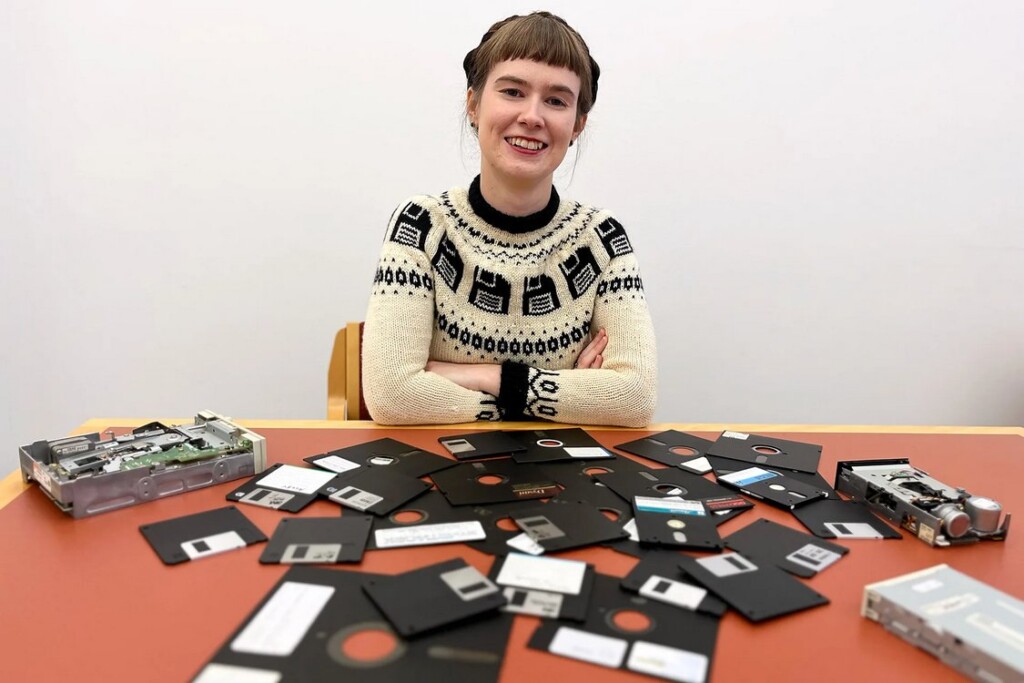 Credit – Cambridge University Library Credit – Cambridge University LibraryCambridge University archivists are leading an important project to extract and conserve valuable information from floppy disks before they become unusable. The initiative began when the archive received a box of 5.25-inch floppy disks from a DOS-formatted computer that belonged to none other than physicist Steven Hawking, who was able to use early computers despite his disability from ALS. The challenges a group of archivists encountered when they attempted to read the disks helped them realize how vulnerable this funny, briefly adopted technology which predate compact disks is to the ravages of time, and how a clock was ticking to get important information off them before they became unusable. It spawned a project, aptly named in our current pop-culture environment: “Future Nostalgia.” Before the term was chased from the historical lexicon with torches and pitchforks, “the Dark Ages” were used to describe the period in European history when primary source writings are particularly scant—between the fall of Rome and the Middle Ages. The Future Nostalgia project presents the case that the late 20th century may form a sort of dark ages when historians in the future look back on our time and see a big hole in early computer writings. Certainly books and magazines and newspapers are available a-plenty, but if floppy disks and other early technologies aren’t kept in good order, early computer writings may seem sparce to future historians. Floppy disks present numerous challenges to archivists, among which were the multiple formats they were built and coded for. “There wasn’t one system that dominated the market,” explains Leontien Talboom, a member of the Cambridge University Library’s digital preservation team who is leading the project. That means that as many as a dozen different early computing systems are needed to read the full spectrum of floppy disk formats, and it’s not always straight forward finding these machines. Nor is it straightforward that the disks themselves are readable. They may be moldy, if stowed away in an attic for example. Iron oxide on the surface of the plastic may corrode material away. It can also lose its magnetism, preventing it being from read entirely. That is why Talboom and her team are urgently trying to acquire collections of noteworthy writers or authors—like Hawking—and further digitize them from their early floppy disk format. So far, in addition to Hawking, they’ve uncovered abstract lists by the poet Nicholas Moore, articles from a society of the paranormal, and more. “Most of the donations we get are from people who are either retiring or passing away,” Talboom told the BBC. “That means we’re seeing more and more things from the era of personal computing.” Not only are donations coming from those retired or passed, but so is a lot of information on how to use different formats. An example comes from the archivists’ work with a set of floppy disks that contained speeches and letters with constituents of Neil Kinnock, a UK labor party leader in the 1980s. “They were written on the Diamond Word processor,” explained Chris Knowles, a participant in the Future Nostalgia project.” There’s not much information about that system out there. There are lots of fan communities around any system that had games, and archivists often borrow their tools. But where that doesn’t exist, it’s more awkward.”Work continues, and Talboom is more and more eager to have the public’s involvement with the project. She sees it as a win-win partnership: owners of floppy disks get to see what kind of materials their old colleagues or family members wrote onto them, and Future Nostalgia gets more material, but also more knowledge and practice about how to access and preserve floppy disk formats and the material they contain. Library is Rescuing Historical Treasures Trapped on Old Floppy Disks from the ‘Digital Dark Ages’
|