
 A U.S. Navy utilitiesman performs maintenance on subsea cables at the Pacific Missile Range Facility in Hawaii. Subsea cables are essential to global connectivity, economic exchange, and strategic coordination, and militarily, they are indispensable for national security, logistics, and coalition operations. (U.S. Navy photo by Builder 2nc Class Ben Reed/Released) Public Space 13th April 2026 As subsea cables power the modern digital world, the United States is working with partners including India to secure these vital networks and strengthen connectivity across the Indo-Pacific. Giriraj Agarwal SPAN Magazine, U.S. Embassy New Delhi Beneath the vast waters of the Indo-Pacific lies a largely unseen but indispensable network powering the modern world. Subsea cables, often overlooked in public discourse, are essential to global connectivity, economic exchange, and strategic coordination. “Subsea cables carry over 95 percent of international internet traffic, supporting everything from cross-border payments to cloud and AI services,” says an economic officer at U.S. Embassy New Delhi. “Because so many routes run through Indo-Pacific chokepoints, any cut or compromise there can send shockwaves through the global economy.” This is why securing subsea cables has become a frontline strategic issue. For the United States and the many countries they connect, these cables are economic lifelines. “Asia-focused routes support a vast share of U.S. digital trade and services exports, and one recent estimate suggests that connectivity with the region via subsea systems adds on the order of $169 billion a year to the U.S. economy,” the officer says. “They are also the critical backbone of the AI and cloud era,” she adds, pointing to investments by major U.S. technology firms in trans-Pacific and regional cable systems to enhance speed, security, and resilience. The strategic dimension is equally significant. “Militarily, the same fiber-optic networks are indispensable to the United States for national security, logistics, and coalition operations,” she says. “We need to protect them from physical and technical threats because these cable networks hold a real impact on how power is exercised in the Indo-Pacific.” Building secure networks In response, U.S. policy is increasingly focused on strengthening subsea cable infrastructure and shaping how these networks are built and secured. The Department of State’s CABLES Program, the officer explains, “aims to shape where and how new cables are built, who supplies them, and what security standards they follow.” Through partnerships with governments and industry, the program promotes best practices, route diversification, and safeguards against risks like sabotage, surveillance, and overreliance on untrusted vendors. Complementing these efforts, the Quad Partnership for Cable Connectivity and Resilience, linking the United States, India, Japan, and Australia, seeks to expand secure connectivity and strengthen network resilience across the region. “These efforts back trusted suppliers, push for high infrastructure standards, and encourage new cable routes that avoid single points of failure,” says the officer. Partnering for digital resilience India is emerging as an important partner in this evolving landscape. “India’s digital consumption is booming with 36 GB per user per month which is amongst the highest globally,” she notes, highlighting its nearly one billion internet users and rapidly expanding data infrastructure. Its geographic position further enhances its importance, placing it “at the crossroads of Asia, the Middle East, Africa, and Europe, astride key subsea routes.” U.S. companies are playing a central role in this transformation. “U.S. hyperscalers remain central to India’s digital ecosystem,” she says, pointing to new investments that are reshaping both India’s and the region’s connectivity by diversifying landing points. Recent projects in cities like Visakhapatnam and Mumbai are expected to broaden India’s subsea gateways, strengthen resilience, and support the AI-scale data and cloud capacity the country increasingly needs. “Beyond the infrastructure itself,” says the officer, “U.S.-India collaboration can also shape regional norms by championing transparent procurement, trusted suppliers, and high standards for secure cable development.” Risks beneath the surface Despite their critical role, subsea cables face a range of vulnerabilities. “The most common threat to subsea cables is surprisingly mundane: accidental human activity,” she observes, noting that fishing trawlers and ship anchors account for most of the roughly 150 cable cuts reported annually. Natural disasters like earthquakes and underwater landslides further compound the risks. Yet the growing concern lies in deliberate disruption. “In a crisis, hostile actors could sabotage cables to cripple communications and economic activity,” she says. Technical vulnerabilities also persist, as cables can be targeted for surveillance, raising concerns about espionage and data interception. Structural weaknesses like limited route redundancy can further increase vulnerability by concentrating traffic along a small number of pathways. “When a cable is cut, repairs can take days or even weeks depending on location, permits, and weather,” the officer explains. “In contested regions such as the South China Sea or the Taiwan Strait, cable disruptions could slow connectivity, interrupt financial flows, complicate military communications, and affect economies that depend heavily on digital trade.” Insights from the Wavelength Forum The July 2025 Wavelength Forum in New Delhi underscored the urgency of action. “A key takeaway is that subsea cables must be treated as frontline strategic infrastructure,” she says. Participants called for regulatory reforms, including a streamlined single-window clearance system in India so installation and repairs can proceed quickly. They also emphasized the importance of diversifying landing stations beyond a few coastal cities and strengthening inland connectivity to reduce systemic vulnerabilities. Another critical gap identified was repair readiness in India. “Vessels often take too long to reach fault sites, prolonging outages and raising economic and security risks,” the officer notes. Overall, the forum reinforced that cable protection is inseparable from economic security, digital resilience, and geopolitical stability. Industry leaders at the forum agreed that, looking ahead, India’s priorities should include streamlining approvals for cable installation and enabling rapid emergency repairs so that faults can be resolved quickly. Above all, international cooperation is essential. “Stronger international cooperation, particularly between the United States and India, can promote trusted suppliers, better information-sharing, and common standards for secure cable development across the Indo-Pacific.” Securing the Digital Lifelines of Global Connectivity | MorungExpress | morungexpress.com |

Bridging the Digital Divide: 5G Drives Rural Revitalization in Guangxi, China (2026-06-18T12:07:00+05:30)
 Posted by Rosie Foster | [Chongzuo, China, March 26, 2026] In the karst terrain of Guangxi Zhuang Autonomous Region, Buhua Village, once a remote and economically underdeveloped community, has been transformed into a popular tourist attraction thanks to a 5G information superhighway co-built by China Mobile and Huawei. This digital leap has established the village as a model of rural revitalization, generating over CNY500,000 in annual collective village income and boosting per capita annual earnings by CNY18,000. Chongzuo is characterized by impressive karst landforms with peak clusters and peak forests. This breathtaking terrain presents huge challenges for communications network buildout. To overcome these geographic barriers, China Mobile and Huawei have collaborated on technological innovations in a bid to achieve comprehensive network coverage. Today, all administrative villages in Chongzuo have access to 5G networks, while 99% of its natural villages have 4G coverage and 94% have 5G coverage. Buhua Village is within the jurisdiction of Chongzuo City. The village upgraded its networks from 4G to 5G as early as 2021, offering residents digital services on par with those seen in major cities. The deployment of advanced communications networks has catalyzed the growth of Buhua’s distinctive local industries. In Xinhe Town, where the village is situated, a digital e-commerce ecosystem has been established, featuring 65 product stores on platforms like JD.com and Douyin, which are collectively owned by the village. Furthermore, a live-streaming incubation base has been established, nurturing 27 local live streamers. These stores secure over CNY300,000 in revenue each year by selling local specialties like Buhua brown sugar. This is a handcrafted product that is recognized as intangible cultural heritage, with a 150% price premium over normal brown sugar. It is sold to tier-1 cities in China, like Beijing, Shanghai, and Guangzhou, and is even exported overseas, including to Japan and South Korea. Digital technology is also driving the upgrade of the local tourism industry. China Mobile has established an intelligent ticketing system at the Heishui River, which is Buhua Village’s most popular scenic spot where activities like rafting, boat tours, and paddleboarding are available for tourists. This system has reduced the average time for tourists to purchase tickets from 20 minutes to just 3 minutes, with online purchases now accounting for 30% of the total. Accommodation can also be booked through the system, which has increased the booking rate of local homestays by 30%. Digitalization has further expanded to the ecological protection field. A safety monitoring and IT system project for modern irrigation engineering along the Heishui River has been launched, with investment totaling CNY100 million. Supported by the Bianjiang Zhizhou open AI platform, the digital monitoring system is set to cover 13 towns across four counties/districts in Chongzuo. Once up and running, it will enable the integrated, real-time monitoring of water quality and other ecological parameters of the Heishui River, and intelligently issue early warnings to guarantee safe water irrigation across 60,000 hectares of farmland in the river basin. Digitalization has helped Buhua Village make the jump from poverty to prosperity. In 2025, the village’s annual collective economic income (generated from assets, land, or enterprises owned by the village community rather than individuals) exceeded CNY500,000. The average income of every household reached over CNY80,000, three times the average income from traditional sugarcane farming. The annual per capita income of villagers increased by CNY18,000. As a result, an increasing number of young people have chosen to return to the village and develop their careers. Zhou Peng, General Manager of China Mobile Guangxi’s Chongzuo Branch, said, “By bridging the digital divide, we are helping remote villages like Buhua develop digital trade alongside traditional agriculture. This is transforming resources that were not fully used in the past due to geographical limitations into strong momentum for economic growth in the digital age.” Tian Yongsheng, Deputy General Manager of Huawei Guangxi, noted, “Huawei is supporting China Mobile in building a solid digital foundation for Chongzuo with innovative solutions. We look forward to seeing technology overcome geographical limitations and enable more remote villages to achieve leapfrog development in the 5G and AI era.” Bridging the Digital Divide: 5G Drives Rural Revitalization in Guangxi, China - Total Telecom |
India ranks among top digital economies, strong in AI performance: Report (2026-06-16T12:23:00+05:30)
 IANS Photo New Delhi, (IANS): India has climbed to fifth place in global digital economy rankings and ranked fourth on the CHIPS‑AI index, marking accelerating digital momentum in an increasingly competitive environment, a report said on Friday. The report from the ICRIER‑Prosus Centre for Internet and Digital Economy (IPCIDE) said that the study among 71 countries, covering 96 per cent of global GDP, revealed that "India outpaced major developed economies, including Germany, France, Japan and Canada, in digital performance." India generated $328 billion in digitally delivered trade AND hosts the world’s second‑largest AI talent pool, it said. In addition, the country represents roughly 50 per cent of BRICS digitally delivered services. The country ranked behind only the United States, China and Singapore in AI performance. Among the world's top five digital economies, three -- China, Singapore and India -- are now from the Indo-Pacific region, signalling the emergence of a tripolar digital order alongside the traditional North Atlantic pole. The report documented a fundamental shift in the global digital landscape, with 72 per cent of AI users now in developing countries. India and China together accounted for nearly two-fifths of worldwide AI adoption. “India has built strong foundations through connectivity, entrepreneurship and digital public infrastructure. The next phase of growth depends on how effectively we leverage AI, deepen innovation capabilities and strengthen digital trust,” said Pramod Bhasin, Chairperson, ICRIER. India commands 26 per cent of global AI users but just 1 per cent of global private AI investment, reflecting a crucial gap. Moreover, the nation ranks second globally in AI talent after the United States but lacks comparable levels of long-term venture capital and computing infrastructure, reflecting both challenge and opportunity. India's long-term competitiveness depends on mobilising risk capital, expanding compute access, strengthening university-startup linkages and building AI commercialisation pathways, the report noted.While AI adoption spreads rapidly, advanced chips, compute infrastructure and large language models remain concentrated among a small group of countries and firms. India ranks among top digital economies, strong in AI performance: Report | MorungExpress | morungexpress.com |
POSHAN Abhiyaan monitors 14 lakh Anganwadi centres digitally (2026-06-11T11:30:00+05:30)
 (AI image/IANS) New Delhi, (IANS) Use of digital tools such as the Poshan Tracker Application now enables near real‑time monitoring of over 14 lakh Anganwadi Centres and nearly 9 crore beneficiaries under the mission, the government said on Tuesday. As POSHAN Abhiyaan completes eight years, its Jan Andolan approach has mobilised communities nationwide, with initiatives such as Poshan Maah and Poshan Pakhwada generating over 150 crore activities, an official statement said. "The mission reflects the growing emphasis on convergence, technology-enabled governance and community participation in addressing nutrition challenges," it said. The programme’s evolution showed that coordinated action across sectors and strengthened service delivery platforms are crucial, along with sustained behavioural change efforts in improving nutrition outcomes. The transition to Mission Poshan 2.0 underscored a continued focus on improving service quality, expanding early childhood care and strengthening last-mile delivery systems. By integrating nutrition with health, early childhood care, education and community engagement, the mission adopts a comprehensive approach to supporting vulnerable populations, the government said. POSHAN Abhiyaan launched in 2018 marked a shift in India’s approach from treating nutrition primarily as a welfare concern, to recognising it as a national priority linked to human capital development, the Sustainable Development Goals (SDG) and long-term growth. It brought together over 26 ministries and departments under a unified nutrition framework, recognising the importance of simultaneous action on sanitation, education, water, women's empowerment, and income. Crucially, POSHAN Abhiyaan was designed around a lifecycle and preventive approach — rather than solely addressing acute malnutrition after it occurs, the statement noted. It focused on the first 1,000 days of an infant from conception to two years of age- critical for physical growth, brain development and long-term health outcomes. Further, Poshan Vatikas or Nutri-gardens are being set up at Anganwadi Centres, government schools and Gram Panchayat lands to promote diet diversity and the consumption of locally available nutritious food. These gardens provide easy and affordable access to fruits, vegetables, and medicinal plants. https://www.morungexpress.com/poshan-abhiyaan-monitors-14-lakh-anganwadi-centres-digitally |
Three ways to avoid being fooled by AI slop (2026-06-10T12:30:00+05:30)

Silvia Montaña-Niño, The University of Melbourne and T.J. Thomson, RMIT University
Global society makes billions of images and uploads hundreds of thousands of hours of video on the internet every day. The problem is, some of this content is misleading or downright wrong. And when it’s in visual form, it can be particularly convincing. Take the Met Gala that happened earlier this month in New York. While photographers snapped photos of Rhianna, Beyoncé and Nicole Kidman as they strutted their stuff, others saw “photos” of celebrities, such as Rosalía, Lady Gaga and Jacob Elordi, who were actually elsewhere (the images in the below Instagram carousel are AI generated). While this type of AI slop might seem harmless and can be easily verified, other “media fakery” is becoming far more problematic and demands more robust techniques to verify. Traditional verification techniques are falling short as AI becomes increasingly convincing and the line between authentic and synthetic blurs. This is true across all content, from still images to moving ones and audio deepfakes. The volume of content and the speed at which it travels doesn’t help. It also doesn’t help that fact-checking can take hours or days while fakes can be created in seconds. First, equip yourselfGuides on detecting AI-generated content suggest multiple strategies and acknowledge there are no perfect solutions. But there are helpful things you can do. Familiarise yourself with examples of fakes and study how they were fact-checked. This helps you understand what is possible and learn how fact-checkers sort real from fake. Look deeply. Zoom in. Pause the content or watch it frame-by-frame. Inspect the small details. Look out for inconsistencies, textures that are flat when they shouldn’t be, or patterns that are too perfect or are inexplicably off. Does the location shown match with where the scene is purported to be? Do shadows fall naturally and do lines follow the rules of perspective? Look widely. Are you familiar with the source? What else does it publish and how long has it been around? What do other trusted sources say? How does this depiction compare to others that are available? Or if there aren’t others available, should that give you pause? Then, apply your learningsLet’s take an example and work through it together. This Facebook reel, posted by an account called “Real Talk Hub”, purports to show migrants being stopped and returned by Australian police at an airport. Before getting too granular, let’s take stock of the opening image.  
The video uses scale to show what appears to be a long stream of passengers. Some are moving toward and some are moving away from a plane. It is difficult to identify specifics in the video. The superimposed text blocks almost all of the horizon line. Shallow depth of field makes aspects in the distance blurry and hard to discern.  
Many of the passengers have darker skin and are visually coded as “other”. They interact with a light-skinned police officer who takes notes on a clipboard. The vertical video is framed carefully to not reveal identifiers like the name of the airline that seems to start with the letter “P”. This makes it difficult to search the airline’s name and whether credible sources corroborate the story that’s told. 
Even though the people and scenes look realistic at first glance, the video’s integrity unravels when we slow down and look closer. People in the passenger line morph and transform. The officer is able to single-handedly remove the paper from the clipboard and it appears to inexplicably leave white strips behind. The police vests look different to images you can find in verified media photos of the Australian Federal Police. Taken together, all these clues suggest the video is AI-generated.  The paper on the clipboard moves in an unrealistic way, and the police vest is not accurate. Real Talk Hub/Facebook The paper on the clipboard moves in an unrealistic way, and the police vest is not accurate. Real Talk Hub/FacebookThink like a fact-checkerMany AI-generated videos can trick you and create a very compelling narrative. So, fact-checkers have developed triangulated methodologies that examine elements beyond just what you see in the video. One way to do this is to systematically check contextual factors – the other things surrounding the content. Our team’s research has found professional fact-checkers usually pay attention to the type of social media accounts or websites distributing suspicious media. For this AAP verification on a video about banning dogs on the beach, it was crucial to inspect the user’s activity and posting patterns. In addition to visual anomalies, the fact-checkers also found an invisible watermark that helped them determine the content was AI-generated. Other things to check are how long a social media account has been operating, how often the social media account posts, and whether the account is transparent about its use of AI. These aren’t fool-proof indicators of authenticity, though. The migrant example above comes from an account that is about five years old. It also comes from a “verified” account, which might make it feel more credible. But both Facebook and X now let users pay for this verification. Overall, when it comes to suspect images or video, don’t just look deeply. Also look widely. AI-generated content can increasingly fool our eyes, so you also have to look beyond what’s in the video. Taking a mixed-methods approach that considers visual and contextual clues can help. By training your ability to think like a fact-checker, you can stay safer online. Silvia Montaña-Niño, Lecturer, Centre for Advancing Journalism, The University of Melbourne and T.J. Thomson, Associate Professor of Visual Communication & Digital Media, RMIT University This article is republished from The Conversation under a Creative Commons license. Read the original article. |

What is a ‘digital detox’ and will it make me healthier? (2026-05-28T12:51:00+05:30)
Joanne Orlando, Western Sydney UniversityAre you surrounded by screens? Today, we rely on technology to do everything from sending emails to ordering food. But being constantly connected can leave us physically and mentally exhausted. That’s why some people are doing “digital detoxes”, the practice of staying away from devices and social media for a set period of time. The concept is gaining traction online, with supporters spruiking the health benefits of the “analogue lifestyle”. Some are even paying big bucks to go on “digital retreats”, with the aim of becoming healthier and happier. But do digital detoxes actually work, or are they just another wellness trend? What is a ‘digital detox’?The term “digital detox” stems from detoxification, the process of safely getting a person off an addictive substance such as alcohol or drugs. This is usually done with support from a health-care professional. So the idea of a digital detox is to step away from technology, to instead experience life with fewer distractions and foster relationships offline. The trouble with techOn average, young people in Australia look at screens for nine hours a day. Research suggests adults aren’t much better, with Australians aged between 45 and 64 spending up to six hours each day on screens. As a result, more people are experiencing information overload, the idea of being physically and emotionally overwhelmed by an immense amount of data. A related concept is social media fatigue, a consequence of being constantly connected through online platforms. But there are signs people are resisting the pull of technology. Some younger people are swapping screens for hands-on hobbies such as knitting, and joining chess clubs and other offline social activities. They are also driving trends such as “raw-dogging boredom”, the practice of sitting through long haul flights without headphones. And friction-maxxing, the idea you can become a better, more resilient person by doing tasks that involve some level of difficulty, is also gaining traction online. So in a sense, digital detoxes are just the latest online trend. Do ‘digital detoxes’ work?Current research suggests digital detoxes may have some benefits. But the evidence is far from conclusive. One 2025 meta-analysis examined 20 randomised controlled trials, all looking at the effects of social media detoxes. It found taking a short break from social media had a small but positive effect on people’s feelings of life satisfaction and self-esteem. Participants also reported feeling less anxious, depressed and lonely. In another 2025 study, researchers blocked participants’ smartphones so they could only receive calls and texts, over a two-week period. The results were striking. The researchers found this intervention had a greater positive effect on participants’ mental health than antidepressants. Importantly, this was because participants spent less time on their phones, but also spent this time doing beneficial activities such as socialising in person, exercising and being in nature. Not for everyoneDigital detoxes may impact people differently, due to various factors. One is cultural context. Research suggests people using social media in collectivist cultures such as Turkey may experience more social pressure to respond quickly and maintain extensive networks, compared to those in more individualistic societies. So people in collectivist cultures may benefit more from taking a break from social media. Another is gender. Research suggests women mainly use social media to maintain relationships, and that they compare their physical appearance to others. This means they may benefit more from a digital detox, compared to men. One 2020 study found women who took a one-week break from Instagram felt significantly more satisfied with their life than women who stayed on it. However, the researchers did not see the same effect in men. All about the approachCurrent research suggests doing a digital detox may improve your mental health. But the way you approach it matters. You shouldn’t just go cold turkey on technology. That’s because you’re less likely to sustain that change. One 2023 study found people who reduced their daily smartphone use by one hour experienced stronger and more lasting mental health benefits, compared to those who quit entirely. Here are some tips to make your digital detox last:
It’s hard to stay present and connected in our increasingly digital world. But doing a digital detox could help. Importantly, the aim is not to eliminate technology from your life, but to use it in a more conscious, deliberate way. Joanne Orlando, Researcher, Digital Wellbeing, Western Sydney University This article is republished from The Conversation under a Creative Commons license. Read the original article. |

US NRC approves Limerick digital retrofit project (2026-05-05T13:32:00+05:30)
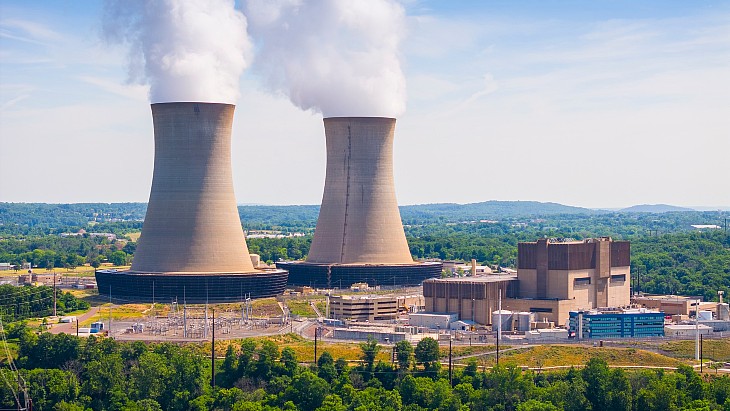 (Image: Constellation) (Image: Constellation)The US Nuclear Regulatory Commission has approved what is described as a first-of-a-kind project to replace analogue instrumentation and control equipment with digital systems. The Limerick Clean Energy Center in Pennsylvania in the USA, is a nuclear power plant featuring two boiling water reactors with a combined capacity of 2,317 MW. The first unit entered commercial service in 1986 and the second unit in 1990. They are currently licensed to operate until 2044 and 2049, respectively. Constellation says the USD167 million Digital Modernization Project will "enhance reliability, diagnostic capability and cyber resilience" and "improve equipment monitoring, provide a broader range of automation and support additional operational flexibility with enhanced reliability". It will be the first large-scale upgrade to a digital safety system at an operating nuclear plant in the US, supported by the US Department of Energy's Light Water Reactor Sustainability Program. The installation of the new system will take place in phases, and digital control rooms will be installed during refuelling outages. The Nuclear Regulatory Commission said in its announcement: "As the nuclear industry advances toward next-generation power reactors equipped with state-of-the-art digital instrumentation and control (I&C) systems, much of today’s operating fleet still relies on analogue controls. While reactor operators have leveraged existing regulatory flexibilities to implement targeted digital upgrades, the NRC’s approval of the Limerick amendments represents a broader and more comprehensive approach. Limerick will be the first operating nuclear power plant the NRC has authorised to perform a major digital retrofit that replaces multiple analogue safety systems with a single digital plant protection system. "The change modernises the control room by replacing legacy equipment with modern digital controls and displays." It said that the approval of licence amendments for Limerick's modernisation project paves the way for future digital I&C modernisation at other US nuclear power plants. Assistant Secretary for Nuclear Energy Ted Garrish said: "Upgrading nuclear power plants with advanced digital systems will help ensure that Americans continue to have access to affordable and abundant energy today and in the future." Joe Dominguez, President and CEO of Constellation, said: "Every dollar we invest to enhance and modernise the nation's largest nuclear fleet will pay dividends for American families and businesses by creating jobs, keeping costs down, improving reliability and adding much-needed capacity to fuel economic growth."Baltimore-based Constellation operates 14 nuclear power plants in the USA with a combined generating capacity of more than 19,000 MWe. These are: Braidwood, Byron, Calvert Cliffs, Clinton, Dresden, FitzPatrick, LaSalle, Limerick, Nine Mile Point, Peach Bottom, Quad Cities, R E Ginna, Salem and South Texas Project. US NRC approves Limerick digital retrofit project: |
India needs 3.2 million green‑skilled workers by 2030: Report (2026-04-23T15:04:00+05:30)
 (AI image/IANS) (AI image/IANS)Mumbai, (IANS) Nearly 45 per cent of core skills are projected to change by 2030 and India will need 3.2 million additional green‑skilled workers by then, a report said on Wednesday. The report from KPMG in India and the Confederation of Indian Industry (CII) said the current MSME talent landscape is characterised by fragmented skill levels, limited formal skilling exposure, and varying degrees of digital readiness. Only about 10 per cent of the MSME workforce have formal vocational training and nearly 69 per cent of MSMEs struggle to source skilled talent, the report said. The report outlined how India’s MSMEs can build digitally fluent, AI‑enabled and green‑ready talent to remain competitive. India’s MSME sector employs 32.84 crore people and contributes 30.1 per cent of GDP and is at a defining moment where talent will determine long‑term resilience and growth, it added. Each MSME worker delivers only 14 per cent of the productivity of a large‑enterprise worker, pointing out huge room for growth in India's MSME sector. The future of MSME work will be shaped by the twin transition and AI adoption, moving work from manual tasks to human–machine collaboration. The report outlined six strategic imperatives such as building an AI‑ready workforce, apprenticeships aligned with digital tools, skills‑first hiring, ONDC‑led digital market access, cluster‑based skill ecosystems, and inclusive talent practices driving transition readiness. “AI will change how MSMEs operate, but skills will determine whether it creates advantage or risk. The twin transition demands a digitally fluent, sustainability‑aware workforce ready to innovate at speed” said Sunit Sinha, Partner and Head, Human Capital Advisory, KPMG in India.Naveen Aggarwal, Office Managing Partner, Delhi-NCR, KPMG in India called MSMEs the heartbeat of India’s economic ambition, adding that the next wave of growth will be led by those that invest in high‑value talent and governed capability. India needs 3.2 million green‑skilled workers by 2030: Report | MorungExpress | morungexpress.com |
Library is Rescuing Historical Treasures Trapped on Old Floppy Disks from the ‘Digital Dark Ages’ (2026-04-10T13:16:00+05:30)
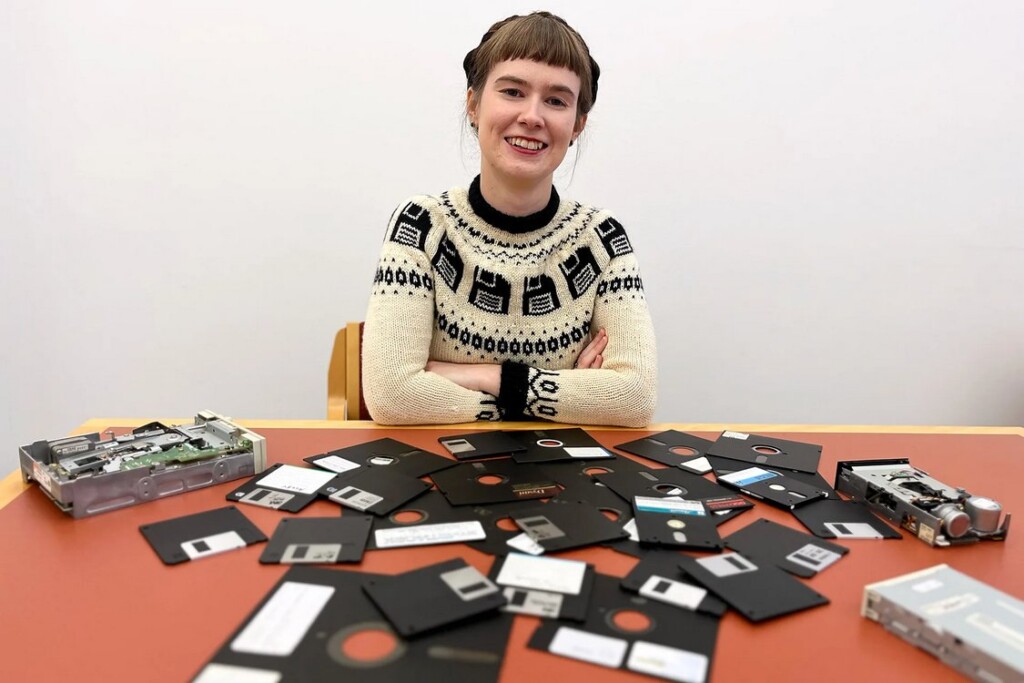 Credit – Cambridge University Library Credit – Cambridge University LibraryCambridge University archivists are leading an important project to extract and conserve valuable information from floppy disks before they become unusable. The initiative began when the archive received a box of 5.25-inch floppy disks from a DOS-formatted computer that belonged to none other than physicist Steven Hawking, who was able to use early computers despite his disability from ALS. The challenges a group of archivists encountered when they attempted to read the disks helped them realize how vulnerable this funny, briefly adopted technology which predate compact disks is to the ravages of time, and how a clock was ticking to get important information off them before they became unusable. It spawned a project, aptly named in our current pop-culture environment: “Future Nostalgia.” Before the term was chased from the historical lexicon with torches and pitchforks, “the Dark Ages” were used to describe the period in European history when primary source writings are particularly scant—between the fall of Rome and the Middle Ages. The Future Nostalgia project presents the case that the late 20th century may form a sort of dark ages when historians in the future look back on our time and see a big hole in early computer writings. Certainly books and magazines and newspapers are available a-plenty, but if floppy disks and other early technologies aren’t kept in good order, early computer writings may seem sparce to future historians. Floppy disks present numerous challenges to archivists, among which were the multiple formats they were built and coded for. “There wasn’t one system that dominated the market,” explains Leontien Talboom, a member of the Cambridge University Library’s digital preservation team who is leading the project. That means that as many as a dozen different early computing systems are needed to read the full spectrum of floppy disk formats, and it’s not always straight forward finding these machines. Nor is it straightforward that the disks themselves are readable. They may be moldy, if stowed away in an attic for example. Iron oxide on the surface of the plastic may corrode material away. It can also lose its magnetism, preventing it being from read entirely. That is why Talboom and her team are urgently trying to acquire collections of noteworthy writers or authors—like Hawking—and further digitize them from their early floppy disk format. So far, in addition to Hawking, they’ve uncovered abstract lists by the poet Nicholas Moore, articles from a society of the paranormal, and more. “Most of the donations we get are from people who are either retiring or passing away,” Talboom told the BBC. “That means we’re seeing more and more things from the era of personal computing.” Not only are donations coming from those retired or passed, but so is a lot of information on how to use different formats. An example comes from the archivists’ work with a set of floppy disks that contained speeches and letters with constituents of Neil Kinnock, a UK labor party leader in the 1980s. “They were written on the Diamond Word processor,” explained Chris Knowles, a participant in the Future Nostalgia project.” There’s not much information about that system out there. There are lots of fan communities around any system that had games, and archivists often borrow their tools. But where that doesn’t exist, it’s more awkward.”Work continues, and Talboom is more and more eager to have the public’s involvement with the project. She sees it as a win-win partnership: owners of floppy disks get to see what kind of materials their old colleagues or family members wrote onto them, and Future Nostalgia gets more material, but also more knowledge and practice about how to access and preserve floppy disk formats and the material they contain. Library is Rescuing Historical Treasures Trapped on Old Floppy Disks from the ‘Digital Dark Ages |
An ‘AI afterlife’ is now a real option – but what becomes of your legal status? (2026-04-02T13:30:00+05:30)
|
Would you create an interactive “digital twin” of yourself that can communicate with loved ones after your death? Generative artificial intelligence (AI) has made it possible to seemingly resurrect the dead. So-called griefbots or deathbots – an AI-generated voice, video avatar or text-based chatbot trained on the data of a deceased person – proliferate in the booming digital afterlife industry, also known as grief tech. Deathbots are usually created by the bereaved, often as part of the grieving process. But there are also services that allow you to create a digital twin of yourself while you’re still alive. So why not create one for when you’re gone? As with any application of new technology, the idea of such digital immortality raises many legal questions – and most of them don’t have a clear answer. Your AI afterlifeTo create an AI digital twin of yourself, you can sign up for a service that provides this feature, and answer a series of questions to provide data about who you are. You also record stories, memories and thoughts in your own voice. You might also upload your visual likeness in the form of images or video. The AI software then creates a digital replica based on that training data. After you die and the company is notified of your death, your loved ones can interact with your digital twin. But in doing this, you’re also delegating agency to a company to create a digital AI simulation of yourself after death. From the get go, this is different to using AI to “resurrect” a dead person who can’t consent to this. Instead, a living person is essentially licensing data about themselves to an AI afterlife company before they’ve died. They’re engaging in a deliberate, contractual creation of AI-generated data for posthumous use. However, there are many unanswered questions. What about copyright? What about your privacy?. What happens if the technology becomes outdated or the business closes? Does the data get sold on? Does the digital twin also “die”, and what effect does this have for a second time on the bereaved? What does the law say?Currently, Australian law doesn’t protect a person’s identity, voice, presence, values or personality as such. In contrast to the United States, Australians don’t have a general publicity or personality right. This means, for an Australian citizen, there’s currently no legal right for you to own or control your identity – the use of your voice, image or likeness. In short, the law doesn’t recognise a proprietary right in most of the unique things that make you “you”. Under copyright law, the concept of your presence or self is abstract, much like an idea is. Copyright doesn’t offer protection for “your presence” or “the self” as such. That’s because there has to be material form in specific categories of works for copyright to exist: these are tangible things, such as books or photos. However, typed responses or the voice recordings submitted to the AI for training are material. This means the data used to train the AI to create your digital twin would likely be protectable. But fully autonomous AI generated output is unlikely to have any copyright attached to it. Under current Australian law, it would likely be considered authorless because it didn’t originate from the “independent intellectual effort” of a human, but from a machine. Moral rights in copyright protect a creator’s reputation against false attribution and against derogatory treatment of their work. However, they wouldn’t apply to a digital twin. This is because moral rights attach to actual works created by a human author, not any AI-generated output. So where does that leave your digital twin? Although it’s unlikely copyright applies to AI-generated output, in their terms and conditions companies may assert ownership of the AI-generated data, users may be granted rights in outputs, or the company may reserve extensive reuse rights. It’s something to look out for. There are ethical risks, tooUsing AI to make digital copies of people – living or dead – also raises ethical risks. For example, even though the training data for your digital twin might be locked upon your death, others will be accessing it in the future by interacting with it. What happens if the technology misrepresents the deceased person’s morals and ethics? As AI is usually probabilistic and based on algorithms, there may be risk of creep or distortion, where the responses drift over time. The deathbot could lose its resemblance to the original person. It’s not clear what recourse the bereaved may have if this happens. AI-enabled deathbots and digital twins can help people grieve, but the effects so far are largely anecdotal – more study is needed. At the same time, there’s potential for bereaved relatives to form a dependence on the AI version of their loved one, rather than processing their grief in a healthier way. If the outputs of AI-powered grief tech cause distress, how can this be managed, and who will be held responsible? The current state of the law clearly shows more regulation is needed in this burgeoning grief tech industry. Even if you consent to the use of your data for an AI digital twin after you die, it’s difficult to anticipate new technologies changing how your data is used in the future. For now, it’s important to always read the terms and conditions if you decide to create a digital afterlife for yourself. After all, you are bound by the contract you sign. Wellett Potter, Senior Lecturer in Law, University of New England This article is republished from The Conversation under a Creative Commons license. Read the original article. |

