
|
Would you create an interactive “digital twin” of yourself that can communicate with loved ones after your death? Generative artificial intelligence (AI) has made it possible to seemingly resurrect the dead. So-called griefbots or deathbots – an AI-generated voice, video avatar or text-based chatbot trained on the data of a deceased person – proliferate in the booming digital afterlife industry, also known as grief tech. Deathbots are usually created by the bereaved, often as part of the grieving process. But there are also services that allow you to create a digital twin of yourself while you’re still alive. So why not create one for when you’re gone? As with any application of new technology, the idea of such digital immortality raises many legal questions – and most of them don’t have a clear answer. Your AI afterlifeTo create an AI digital twin of yourself, you can sign up for a service that provides this feature, and answer a series of questions to provide data about who you are. You also record stories, memories and thoughts in your own voice. You might also upload your visual likeness in the form of images or video. The AI software then creates a digital replica based on that training data. After you die and the company is notified of your death, your loved ones can interact with your digital twin. But in doing this, you’re also delegating agency to a company to create a digital AI simulation of yourself after death. From the get go, this is different to using AI to “resurrect” a dead person who can’t consent to this. Instead, a living person is essentially licensing data about themselves to an AI afterlife company before they’ve died. They’re engaging in a deliberate, contractual creation of AI-generated data for posthumous use. However, there are many unanswered questions. What about copyright? What about your privacy?. What happens if the technology becomes outdated or the business closes? Does the data get sold on? Does the digital twin also “die”, and what effect does this have for a second time on the bereaved? What does the law say?Currently, Australian law doesn’t protect a person’s identity, voice, presence, values or personality as such. In contrast to the United States, Australians don’t have a general publicity or personality right. This means, for an Australian citizen, there’s currently no legal right for you to own or control your identity – the use of your voice, image or likeness. In short, the law doesn’t recognise a proprietary right in most of the unique things that make you “you”. Under copyright law, the concept of your presence or self is abstract, much like an idea is. Copyright doesn’t offer protection for “your presence” or “the self” as such. That’s because there has to be material form in specific categories of works for copyright to exist: these are tangible things, such as books or photos. However, typed responses or the voice recordings submitted to the AI for training are material. This means the data used to train the AI to create your digital twin would likely be protectable. But fully autonomous AI generated output is unlikely to have any copyright attached to it. Under current Australian law, it would likely be considered authorless because it didn’t originate from the “independent intellectual effort” of a human, but from a machine. Moral rights in copyright protect a creator’s reputation against false attribution and against derogatory treatment of their work. However, they wouldn’t apply to a digital twin. This is because moral rights attach to actual works created by a human author, not any AI-generated output. So where does that leave your digital twin? Although it’s unlikely copyright applies to AI-generated output, in their terms and conditions companies may assert ownership of the AI-generated data, users may be granted rights in outputs, or the company may reserve extensive reuse rights. It’s something to look out for. There are ethical risks, tooUsing AI to make digital copies of people – living or dead – also raises ethical risks. For example, even though the training data for your digital twin might be locked upon your death, others will be accessing it in the future by interacting with it. What happens if the technology misrepresents the deceased person’s morals and ethics? As AI is usually probabilistic and based on algorithms, there may be risk of creep or distortion, where the responses drift over time. The deathbot could lose its resemblance to the original person. It’s not clear what recourse the bereaved may have if this happens. AI-enabled deathbots and digital twins can help people grieve, but the effects so far are largely anecdotal – more study is needed. At the same time, there’s potential for bereaved relatives to form a dependence on the AI version of their loved one, rather than processing their grief in a healthier way. If the outputs of AI-powered grief tech cause distress, how can this be managed, and who will be held responsible? The current state of the law clearly shows more regulation is needed in this burgeoning grief tech industry. Even if you consent to the use of your data for an AI digital twin after you die, it’s difficult to anticipate new technologies changing how your data is used in the future. For now, it’s important to always read the terms and conditions if you decide to create a digital afterlife for yourself. After all, you are bound by the contract you sign. Wellett Potter, Senior Lecturer in Law, University of New England This article is republished from The Conversation under a Creative Commons license. Read the original article. |


US NRC approves Limerick digital retrofit project (2026-02-25T13:51:00+05:30)
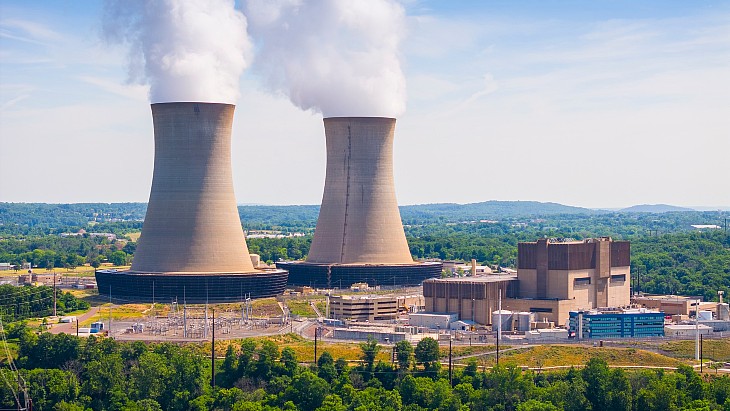 (Image: Constellation) (Image: Constellation)The US Nuclear Regulatory Commission has approved what is described as a first-of-a-kind project to replace analogue instrumentation and control equipment with digital systems. The Limerick Clean Energy Center in Pennsylvania in the USA, is a nuclear power plant featuring two boiling water reactors with a combined capacity of 2,317 MW. The first unit entered commercial service in 1986 and the second unit in 1990. They are currently licensed to operate until 2044 and 2049, respectively. Constellation says the USD167 million Digital Modernization Project will "enhance reliability, diagnostic capability and cyber resilience" and "improve equipment monitoring, provide a broader range of automation and support additional operational flexibility with enhanced reliability". It will be the first large-scale upgrade to a digital safety system at an operating nuclear plant in the US, supported by the US Department of Energy's Light Water Reactor Sustainability Program. The installation of the new system will take place in phases, and digital control rooms will be installed during refuelling outages. The Nuclear Regulatory Commission said in its announcement: "As the nuclear industry advances toward next-generation power reactors equipped with state-of-the-art digital instrumentation and control (I&C) systems, much of today’s operating fleet still relies on analogue controls. While reactor operators have leveraged existing regulatory flexibilities to implement targeted digital upgrades, the NRC’s approval of the Limerick amendments represents a broader and more comprehensive approach. Limerick will be the first operating nuclear power plant the NRC has authorised to perform a major digital retrofit that replaces multiple analogue safety systems with a single digital plant protection system. "The change modernises the control room by replacing legacy equipment with modern digital controls and displays." It said that the approval of licence amendments for Limerick's modernisation project paves the way for future digital I&C modernisation at other US nuclear power plants. Assistant Secretary for Nuclear Energy Ted Garrish said: "Upgrading nuclear power plants with advanced digital systems will help ensure that Americans continue to have access to affordable and abundant energy today and in the future." Joe Dominguez, President and CEO of Constellation, said: "Every dollar we invest to enhance and modernise the nation's largest nuclear fleet will pay dividends for American families and businesses by creating jobs, keeping costs down, improving reliability and adding much-needed capacity to fuel economic growth."Baltimore-based Constellation operates 14 nuclear power plants in the USA with a combined generating capacity of more than 19,000 MWe. These are: Braidwood, Byron, Calvert Cliffs, Clinton, Dresden, FitzPatrick, LaSalle, Limerick, Nine Mile Point, Peach Bottom, Quad Cities, R E Ginna, Salem and South Texas Project. US NRC approves Limerick digital retrofit project\ |
With seemingly endless data storage at our fingertips, ‘digital hoarding’ could be an increasing problem (2025-12-24T12:46:00+05:30)
Darshana Sedera, Southern Cross University and Sachithra Lokuge, University of Southern QueenslandAs data storage has become more accessible than ever, the amount of digital “stuff” we all have stashed away is on the rise, too – for many of us, it’s becoming more unwieldy by the day. In a recent paper published in the journal Information & Management, we have investigated a rising phenomenon called “digital hoarding” – the need to acquire and hold onto digital content without an intended purpose. The way we interact with digital content through easily available smartphones, social media and messaging apps only exacerbates the behaviour. Social media platforms especially encourage us to hoard, as our emotions get entangled with the digital contents we share with others, such as photos with lots of shares or likes. If it can take up to 25 or more selfies before seeing a “winner”, the sheer volume of content creation raises an important question: how do we plan to manage this morass of data? Taking clutter into the digital eraHoarding is defined as a persistent difficulty in discarding one’s posessions, and can be either a disorder on its own, or a symptom of another mental health issue such as obsessive-compulsive disorder. A person with hoarding disorder experiences distress at the thought of getting rid of the items. They end up with an excessive accumulation of stuff in their home, regardless of actual value. We propose that digital hoarding happens when an individual constantly acquires digital content, feels difficulty in discarding it, and accumulates digital content without an intended purpose. Digital hoarding can quickly spiral out of control, too – perhaps even more quickly than in the physical world, due to several reasons. First, the digital hoarder is less likely to notice the space limitations in the digital world. While the boundaries of a physical space are clear, such boundaries are less prominent in digital spaces. Second, hoarding of physical objects happens in fixed boundaries, while digital spaces are “expandable” – you can get additional digital storage with minimum effort at very little or zero cost. Third, to hoard physical items, a person needs to expend some effort, such as purchasing them. By contrast, most digital contents are either self-created, free, or available on a subscription basis. Fourth, compared with physical stuff, digital contents can be multiplied (for example, by making copies) with very minimal effort. Overall, having various formats of digital content, an endless capacity to expand storage, increasing emotional attachment, and the lack of a sophisticated retrieval system may all make an individual nervous to delete this digital content – showing the potential signs of digital hoarding. We define digital hoarding based on these three criteria: constant acquisition of digital contents, discarding difficulty, and a propensity for digital content clutter. Constant acquisition refers to the constant gathering of digital content, without much consideration of its value, purpose or utility. With most communications taking place electronically, we tend to keep any and all digital content without discrimination – just in case! This includes emails, images, videos, bills and receipts. In our research sample, some people had gathered more than 40 terabytes (TB) of digital content over time. Acquisition refers not just to photos you have in storage devices, for instance, but also ones uploaded to social media. Difficulty of discarding digital content is the second characteristic of digital hoarding. Think about the last time you meticulously deleted old emails, for example. Theoretically, an individual with compulsive hoarding disorder tends to place high value on the contents they have, and as a result, they feel great difficulty discarding them. Clutter propensity is the third characteristic of digital hoarding. It refers to how abundant digital contents, often unrelated, are stored in a disordered fashion. As most digital contents can be stored in any digital device, individuals tend to save such content without much organisation and think they can sort it out later. This often leads to a feeling of being disorganised and cluttered in digital spaces. What can you do to curb digital hoarding?In our survey of 846 respondents representing the general population, we found that digital hoarding can lead to higher levels of anxiety. Statistically, 37% of one’s total level of anxiety, measured using an established depression, anxiety, and stress scale, was explained by digital hoarding. Our research also showed females are 27% more likely to feel the negative impacts of digital hoarding, compared with their male counterparts. Not surprisingly, the number of data storage devices someone owned worsened the impact of digital hoarding. For example, if someone owns multiple hard drives or cloud storage, digital hoarding impacts can increase. In the modern world, it is inevitable that digital content plays an important role in our lives. Therefore, the potential of serious mental health impacts from digital hoarding is a real possibility. If you think you’re holding onto too much digital content, here are some tips:
However, if you find these issues particularly difficult or confronting, consider speaking to your doctor or a mental health specialist. Darshana Sedera, Associate Dean (Research), Southern Cross University and Sachithra Lokuge, Lecturer, Information Systems, University of Southern Queensland This article is republished from The Conversation under a Creative Commons license. Read the original article. |

India can help tackle digital inequality, build an inclusive AI future for world: UNDP (2025-12-05T12:58:00+05:30)
 IANS Photo New Delhi, (IANS): India is well-positioned to tackle digital inequality and shape an inclusive transition in Artificial Intelligence (AI) for the world, said a new United Nations Development Programme (UNDP) report released on Tuesday. While AI is advancing at a historic pace, strong digital ecosystems in some countries and limited connectivity, skills, and infrastructure in others are widening gaps. The report, focussed on the Asia Pacific region, warned that without deliberate action, AI could widen gaps in income, opportunity, and governance, reversing years of progress in reducing global inequality. However, it showed that India’s digital public infrastructure, expanding AI research ecosystem, and large technology workforce provide a strong foundation to scale AI for public value. “India’s digital strengths give it a head start in building an AI future that works for everyone. AI is already strengthening public health, improving climate resilience, and supporting better services. The real test is ensuring these gains reach every community,” said Dr Angela Lusigi, Resident Representative, UNDP India. “The choices we make now will determine whether AI narrows gaps or widens them. India can lead by ensuring its benefits reach rural communities, women, and young people, not only those already connected,” she added. The report highlighted India as a country that can demonstrate how AI can be scaled safely and inclusively. India is already applying AI to strengthen major public systems. Aadhaar, the world’s largest biometric ID system with over 1.3 billion residents, is the biggest example. It has been increasingly paired with AI to reduce fraud, improve targeting, and ensure benefits reach the right households. The country's health sector is also seeing increasing AI adaptation, especially in chest X-ray interpretation in tuberculosis screening, and to tackle climate change, to predict floods and other weather conditions. AI is also being applied in India's agriculture sector to help authorities identify climate-vulnerable districts and guide climate-smart agriculture, as well as strengthen biodiversity with AI-enabled species identification and real-time alerts. AI’s long-term impact will depend on choices made now -- especially investments in digital governance, inclusion, and safeguards, the report said. It called "for India to continue leading on people-first AI, focusing on transparency, equitable access, and participation of marginalised communities in designing AI systems".“With the right policies, India can help steer the region away from a new era of inequality and toward an inclusive AI future that advances the Sustainable Development Goals,” it added. India can help tackle digital inequality, build an inclusive AI future for world: UNDP | MorungExpress | morungexpress.com
|
Nagaland gets first end-to-end digital health model facility (2025-12-02T12:06:00+05:30)
 Anoop Khinchi, Commissioner & Secretary, GoN; Dr Nyan Kikon, State Nodal Officer for ABDM Nagaland, and others during the media interaction at District Hospital, Dimapur on November 29. (Morung Photo) District Hospital, Dimapur has been selected as Nagaland’s first fully digital health model facility under the Ayushman Bharat Digital Mission (ABDM). The Commissioner and Secretary to the Government of Nagaland and State Mission Director of ABDM, Department of Health and Family Welfare, Anoop Khinchi, inaugurated the End-to-End Model Facility and officially launched the Scan & Share feature at the District Hospital today. At the launch, Khinchi described the pilot initiative as a significant milestone in Nagaland’s efforts to strengthen healthcare delivery. He said the state was “not only embracing technology but also reaffirming its commitment to transparency, efficiency, and dignity in healthcare.” He noted that the End-to-End Model Facility would serve as a benchmark for integrating modern infrastructure, digital innovation, and compassionate care. The Scan & Share feature is a transformative tool that allows patients to seamlessly share their health records with doctors, enabling faster, safer, and more coordinated treatment. According to him, the system means “less waiting, less paperwork, and more time for what truly matters—care, healing, and hope.” Citing the core of this transformation, Khinchi highlighted the Ayushman Bharat Health Account (ABHA), which provides every citizen with a unique digital health ID for secure access to their health records anytime, anywhere. “ABHA is the key that unlocks a truly connected healthcare system for all,” he said, describing the launch as a commitment to trust, collaboration, and healthier communities. He added that after Dimapur’s launch, Tuensang will follow next, with subsequent rollouts planned across other districts on a daily basis. During a media interaction, Dr Nyan Kikon, State Nodal Officer for ABDM Nagaland, encouraged citizens to actively enroll for ABHA registration. He informed that Nagaland has already achieved nearly 50% saturation in ABHA generation out of 15.7 lakh Aadhaar holders. The ABHA Personal Health Record (PHR) application enables individuals to securely store and manage their health data. Dr Kikon said assistance counters would soon be set up across district hospitals to support the registration process. By comparing the system to popular digital payment platforms like Google Pay and Paytm, he said that multiple PHR applications are available for both Android and iOS, allowing users to choose whichever app they prefer for linking and accessing their records. He further outlined the core components of ABDM like the ABHA digital identity, the Healthcare Professional Registry, the Health Facility Registry, and the ABHA mobile app, which together support smooth and integrated management of personal health information. As the state’s pioneering digital model facility, Dimapur District Hospital will pilot complete digitisation of patient services, from health records linked to ABHA numbers to seamless data flow through the Unified Health Interface. The initiative ensures patient privacy, facilitates on-the-spot ABHA creation, integrates schemes like PM-JAY, and introduces QR-based systems for faster registration and payments. Highlighting the importance of the PHR app, Dr Kikon said that once an individual creates an ABHA ID, the app becomes essential for accessing linked digital health records, effectively placing their medical history directly in their hands. He assured that dedicated staff would be present at registration counters to guide those unfamiliar with the process.Patients can scan the hospital’s QR code using any ABDM-enabled application to share verified demographic details and receive a digital token, allowing them to wait comfortably until their number is displayed. They will need to approach the counter only for payment and to collect their OPD slip indicating the assigned specialist. Nagaland gets first end-to-end digital health model facility | MorungExpress | morungexpress.com
|
New study finds no evidence technology causes ‘digital dementia’ in older people (2025-09-29T11:32:00+05:30)
Nikki-Anne Wilson, UNSW SydneyIn the 21st century, digital technology has changed many aspects of our lives. Generative artificial intelligence (AI) is the latest newcomer, with chatbots and other AI tools changing how we learn and creating considerable philosophical and legal challenges regarding what it means to “outsource thinking”. But the emergence of technology that changes the way we live is not a new issue. The change from analogue to digital technology began around the 1960s and this “digital revolution” is what brought us the internet. An entire generation of people who lived and worked through this evolution are now entering their early 80s. So what can we learn from them about the impact of technology on the ageing brain? A comprehensive new study from researchers at the University of Texas and Baylor University in the United States provides important answers. What is ‘digital dementia’?Much has been written about the potential negative impact from technology on the human brain. According to the “digital dementia” hypothesis introduced by German neuroscientist and psychiatrist Manfred Spitzer in 2012, increased use of digital devices has resulted in an over-reliance on technology. In turn, this has weakened our overall cognitive ability. Three areas of concern regarding the use of technology have previously been noted:
Why is this new study important?We know technology can impact how our brain develops. But the effect of technology on how our brain ages is less understood. This new study by neuropsychologists Jared Benge and Michael Scullin is important because it examines the impact of technology on older people who have experienced significant changes in the way they use technology across their life. The new study performed what is known as a meta-analysis where the results of many previous studies are combined. The authors searched for studies examining technology use in people aged over 50 and examined the association with cognitive decline or dementia. They found 57 studies which included data from more than 411,000 adults. The included studies measured cognitive decline based on lower performance on cognitive tests or a diagnosis of dementia. A reduced risk of cognitive decline Overall, the study found greater use of technology was associated with a reduced risk of cognitive decline. Statistical tests were used to determine the “odds” of having cognitive decline based on exposure to technology. An odds ratio under 1 indicates a reduced risk from exposure and the combined odds ratio in this study was 0.42. This means higher use of technology was associated with a 58% risk reduction for cognitive decline. This benefit was found even when the effect of other things known to contribute to cognitive decline, such as socioeconomic status and other health factors, were accounted for. Interestingly, the magnitude of the effect of technology use on brain function found in this study was similar or stronger than other known protective factors, such as physical activity (approximately a 35% risk reduction), or maintaining a healthy blood pressure (approximately a 13% risk reduction). However, it is important to understand that there are far more studies conducted over many years examining the benefits of managing blood pressure and increasing physical activty, and the mechanisms through which they help protect our brains are far more understood. It is also a lot easier to measure blood pressure than it is use of technology. A strength of this study is that it considered these difficulties by focusing on certain aspects of technology use but excluded others such as brain training games. These findings are encouraging. But we still can’t say technology use causes better cognitive function. More research is needed to see if these findings are replicated in different groups of people (especially those from low and middle income countries) who were underrepresented in this study, and to understand why this relationship might occur. A question of ‘how’ we use technologyIn reality, it’s simply not feasible to live in the world today without using some form of technology. Everything from paying bills to booking our next holiday is now almost completely done online. Maybe we should instead be thinking about how we use technology. Cognitively stimulating activities such as reading, learning a new language and playing music – particularly in early adulthood – can help protect our brains as we age. Greater engagement with technology across our lifespan may be a form of stimulating our memory and thinking, as we adapt to new software updates or learn how to use a new smartphone. It has been suggested this “technological reserve” may be good for our brains. Technology may also help us to stay socially connected, and help us stay independent for longer. A rapidly changing digital world While findings from this study show it’s unlikely all digital technology is bad for us, the way we interact and rely on it is rapidly changing The impact of AI on the ageing brain will only become evident in future decades. However, our ability to adapt to historical technological innovations, and the potential for this to support cognitive function, suggests the future may not be all bad. For example, advances in brain-computer interfaces offer new hope for those experiencing the impact of neurological disease or disability. However, the potential downsides of technology are real, particularly for younger people, including poor mental health. Future research will help determine how we can capture the benefits of technology while limiting the potential for harm. Nikki-Anne Wilson, Postdoctoral Research Fellow, Neuroscience Research Australia (NeuRA), UNSW Sydney This article is republished from The Conversation under a Creative Commons license. Read the original article. |

Building consent reform: how digital technology can make new liability rules watertight (2025-09-22T13:47:00+05:30)
Dat Tien Doan, Auckland University of Technology; Ali Ghaffarian Hoseini, Auckland University of Technology, and Amir Ghaffarianhoseini, Auckland University of TechnologyThe government’s proposed shake-up of New Zealand’s building consent system will be the biggest reform in the sector since 2004. Essentially, the changes will spread liability for building failures across all involved parties, reducing the potential risk faced by councils granting those consents. At present, homeowners can claim the full cost of repairs from any one party, but councils often end up paying when builders collapse financially. Under the new model, each party will pay only for its share of the problem. In theory, this will speed up the consenting process because councils will be less risk averse, meaning construction activity in general will be freed from bottlenecks. In practice, however, a crucial question remains: how will homeowners be protected if things go wrong? Part of the answer lies in other proposals contained in the reform package, such as mandatory home warranties and professional indemnity insurance, similar to schemes in Australia and the United Kingdom. Consolidation of the country’s 67 building consent authorities, which often interpret the Building Act and Building Code differently, is also being considered. But when it comes to failures in building design and construction, the devil is always in the detail – and in New Zealand it is often still contained in unreliable paper trails. As the leaky homes crisis showed, if accountability is also not watertight the costs can be enormous. A comprehensive, reliable and accessible record of the entire consent process is needed to trace and assign liability. The proposed reforms are therefore about more than just simplifying things. They are a chance to modernise the entire system through digital accountability. Closing the accountability gapThink of the consent-and-build record as a secure digital logbook. Every inspection, approval and change can be time-stamped and stored to create a clear record of who did what, and when. For homeowners, that means being able to check years later who signed off their foundations, for example. The UK already does this through its “golden thread” requirement for higher-risk buildings. This ensures information is digital, up to date and accessible throughout a building’s life. Digital tools can also improve efficiency in three main ways:
The integration of digital tools in building approval systems, as shown in the UK and Singapore, makes construction more transparent and efficient. By contrast, New Zealand still relies heavily on paper-based trails and inconsistent council practices. Restore trust and improve productivityThe proposed reforms should make the consent process fairer and more efficient. But without digital accountability, the risk remains that home or building owners still end up bearing the costs when things go wrong and blame can’t be clearly assigned. For the reforms to succeed, these three steps will be vital:
Without these safeguards, proportionate liability risks leaving homeowners in limbo. With them, New Zealand can finally build a system that is fair, fast and future-proof. The changes being signalled are an opportunity to seize the moment and properly digitise the system. This would protect homeowners, restore trust and help close the productivity gap that has dogged the construction sector for decades. Handled well, the reforms could turn the consent system from a bottleneck into a platform for transparency and innovation. But digital accountability can’t be treated as an afterthought, it must be built into the system from the very beginning. Dat Tien Doan, Senior Lecturer, School of Future Environments, Auckland University of Technology; Ali Ghaffarian Hoseini, Professor, Head of Department - Built Environment, Auckland University of Technology, and Amir Ghaffarianhoseini, Professor of Architecture and Urban Microclimate, Auckland University of Technology This article is republished from The Conversation under a Creative Commons license. Read the original article. |

Building consent reform: how digital technology can make new liability rules watertight (2025-09-17T13:55:00+05:30)
Dat Tien Doan, Auckland University of Technology; Ali Ghaffarian Hoseini, Auckland University of Technology, and Amir Ghaffarianhoseini, Auckland University of TechnologyThe government’s proposed shake-up of New Zealand’s building consent system will be the biggest reform in the sector since 2004. Essentially, the changes will spread liability for building failures across all involved parties, reducing the potential risk faced by councils granting those consents. At present, homeowners can claim the full cost of repairs from any one party, but councils often end up paying when builders collapse financially. Under the new model, each party will pay only for its share of the problem. In theory, this will speed up the consenting process because councils will be less risk averse, meaning construction activity in general will be freed from bottlenecks. In practice, however, a crucial question remains: how will homeowners be protected if things go wrong? Part of the answer lies in other proposals contained in the reform package, such as mandatory home warranties and professional indemnity insurance, similar to schemes in Australia and the United Kingdom. Consolidation of the country’s 67 building consent authorities, which often interpret the Building Act and Building Code differently, is also being considered. But when it comes to failures in building design and construction, the devil is always in the detail – and in New Zealand it is often still contained in unreliable paper trails. As the leaky homes crisis showed, if accountability is also not watertight the costs can be enormous. A comprehensive, reliable and accessible record of the entire consent process is needed to trace and assign liability. The proposed reforms are therefore about more than just simplifying things. They are a chance to modernise the entire system through digital accountability. Closing the accountability gapThink of the consent-and-build record as a secure digital logbook. Every inspection, approval and change can be time-stamped and stored to create a clear record of who did what, and when. For homeowners, that means being able to check years later who signed off their foundations, for example. The UK already does this through its “golden thread” requirement for higher-risk buildings. This ensures information is digital, up to date and accessible throughout a building’s life. Digital tools can also improve efficiency in three main ways:
The integration of digital tools in building approval systems, as shown in the UK and Singapore, makes construction more transparent and efficient. By contrast, New Zealand still relies heavily on paper-based trails and inconsistent council practices. Restore trust and improve productivityThe proposed reforms should make the consent process fairer and more efficient. But without digital accountability, the risk remains that home or building owners still end up bearing the costs when things go wrong and blame can’t be clearly assigned. For the reforms to succeed, these three steps will be vital:
Without these safeguards, proportionate liability risks leaving homeowners in limbo. With them, New Zealand can finally build a system that is fair, fast and future-proof. The changes being signalled are an opportunity to seize the moment and properly digitise the system. This would protect homeowners, restore trust and help close the productivity gap that has dogged the construction sector for decades. Handled well, the reforms could turn the consent system from a bottleneck into a platform for transparency and innovation. But digital accountability can’t be treated as an afterthought, it must be built into the system from the very beginning. Dat Tien Doan, Senior Lecturer, School of Future Environments, Auckland University of Technology; Ali Ghaffarian Hoseini, Professor, Head of Department - Built Environment, Auckland University of Technology, and Amir Ghaffarianhoseini, Professor of Architecture and Urban Microclimate, Auckland University of Technology This article is republished from The Conversation under a Creative Commons license. Read the original article. |
Ameriabank Joins UATE, Marking a Groundbreaking Partnership between the Financial and Technological Sectors (2025-08-28T12:31:00+05:30)
.jpg) 04/08/2025, UATE and Ameriabank have announced a groundbreaking partnership in the fintech sector, whereby Ameriabank has become a member of the Union of Advanced Technology Enterprises (UATE). As a Change Maker in the industry, Ameriabank has joined UATE, which unites 250+ tech companies, reaffirming the bank’s strategic positioning and its commitment to following the digital transformation path. The objective of this partnership between the two strategic sectors is to establish a fintech ecosystem and foster a new culture of collaboration in Armenia, which will contribute to the development and progress of both sectors. The launch of the partnership was announced during UATE monthly meeting, held as part of the Sevan Startup Summit.    About UATE The Union of Advanced Technology Enterprises is the technological association of Armenia, the pillar of the country’s high-tech ecosystem. The mission of UATE is the development of Armenia's technological sector and driving the scientific and technical modernization of the country. The primary areas of UATE’s activity are the protection of the interests of companies in the sector, development of human potential and promoting Armenia's presence in the global market of technological solutions. Established in 2000, UATE currently unites 250+ member companies, positioning UATE as one of the oldest and largest business associations in Armenia. About Ameriabank Ameriabank is a leading financial and technology company in Armenia, a major contributor to the Armenian economy. In pursuit of digital transformation, the Bank has implemented unique products, services and innovative platforms designed to meet the diverse financial and non-financial needs people have today and keeps on improving them. Being a dynamically developing fintech environment, Ameriabank offers comprehensive solutions to improve the quality of life.The Bank is supervised by the Central Bank of Armenia. Source Article
|
The Bigger Picture: Revisiting AI’s role in Art (2025-08-14T12:50:00+05:30)
 Prajna Sharma and Harmannat Kaur: Every technological revolution throughout history, from the invention of the printing press to the development of the camera, has changed the way we view and appreciate art. The latest milestone is artificial intelligence, which is becoming influential rapidly in the creative world. AI is now engaging in activities previously exclusive to human abilities, and some of the most discussed ones include art. This development has mixed reactions, both fascination and dread. On one hand, AI makes production of art more accessible, speeds up production, and provides new tools. On the other hand, it brings up issues with ownership and accountability, environmental concerns, cultural appropriation, and the exploitation of labour. Just like previous inventions, we are still in the initial stages of redefining art and setting the principles we require to use a new tool correctly. Hayao Miyazaki, co-founder of Studio Ghibli, once said, “I would never wish to incorporate this technology into my work at all. I strongly feel that this is an insult to life itself.” Rooted in Japanese folklore, traditional styles, and Shinto spiritualism, Studio Ghibli’s hand-drawn, softly coloured everyday-scenes evoke deep nostalgia. Currently, AI systems are trained on vast datasets used to replicate artistic styles, often without the artists’ consent. Although the results might give a desired aesthetic of the art piece, they fall short of the memories, emotions, and cultural meanings embedded by artists into their work. In 2023, a group of American artists filed a lawsuit against companies like StabilityAI and DeviantArt for using their work without consent to train image-generating algorithms. That same year, a Freelancers Union study found 45% of digital artists lost commissions due to AI replacing creative services. The issue extends beyond ethics or style as it impacts livelihoods in an already undervalued industry. In South Korea, public backlash erupted when an AI-generated artwork won a national award over human artists. Despite its concerns, the benefits are hard to ignore. AI can create visuals, compose music, and support creative projects. Search engines use AI to analyse artworks and suggest alternatives, helping users explore new styles and perspectives. AI can democratise access to artmaking, allowing more people to engage with creative expression. AI has also expanded into music through tools like Aiva and Amper Music, which help generate melodies and harmonies that musicians can later refine. In video editing, AI assists with selecting shots and creating realistic animation, as seen in films like Bahubali and RRR. Tools like Murf and Speechify clone voices to create audio from samples. While entertaining, these tools also raise concerns about impersonation, as they can be used to impersonate people and are increasingly being used in voice call scams. AI makes digital art tools more accessible, especially for those with limited finances or geographic access. Everyone has the right to experience and make art. Certifications in data science, AI, and analytics from programs like IABAC can help artists use these tools meaningfully, enabling them to understand trends, use algorithms thoughtfully, and blend data with creativity in music, visual art, or storytelling. AI doesn’t have to replace human creativity, but rather be a collaborator. Used ethically, it can support artists by generating ideas, offering feedback, and refining compositions. It can handle mundane tasks like resizing images or cleaning sketches, freeing up time for conceptual work. To prevent careless use, education must teach how to coexist with AI, not depend on it entirely. While AI is expanding the boundaries of artistic expression, it also raises some concerns about fairness and sustainability. Globally, AI is fuelling a cultural crisis by appropriating ethnic art at the expense of marginalised communities. These systems often reinforce Western aesthetics, favouring Eurocentric features while erasing indigenous, rural, and ethnic identities. This form of appropriation disrespects living cultural expressions when many of these communities are fighting for recognition, and AI further silences their stories by turning them into mass-produced visuals. Powerful corporations like OpenAI, Google, and Meta operate in large unregulated spaces, using their influence to train AI on massive internet datasets, often without creators’ permission. This constitutes exploitation of creative labour. When people upload pictures during trends like the Ghibli art filter, they don’t realise their faces are stored in AI databases and used for image-generation, effectively stealing their identity. Once that data is absorbed, it cannot be undone. While cultural integrity is an important consideration, it's equally important to reflect on how AI might influence the livelihoods of those who depend on their creative talents. For many, art is not just work, but a way of life. Replacing that with machines is not progress but erasure. Who will protect them if their labour is no longer respected or rewarded? The ethical gap with AI is growing, especially where regulations are absent. Companies frequently exploit generative AI to replicate art cheaply, without attribution or compensation. At the same time, misinformation is rising. AI-generated content has become so realistic that it is hard to tell what’s real. For example, a viral video showing a pet kangaroo being denied airplane boarding misled millions. Women, especially celebrities, are often targeted, facing misogyny and harassment through AI-generated/manipulated explicit content. Such images normalise violence and violate privacy and dignity, highlighting the need for enforceable ethical and legal limits on AI development and use. AI was initially meant to relieve humans of repetitive tasks so we could focus on creativity and leisure. Instead, it is now replacing intellectual and creative work, pushing people toward survival-based jobs. It encourages shortcuts over thought, making us less skilled and reflective. Over-reliance on AI risks lowering our collective capacity for original thinking. Beyond culture and labour, there's also the environmental impact that touches our planet and shared global resources. Data centres powering AI use huge volumes of water for cooling, often draining rivers and causing shortages. They produce e-waste with toxic chemicals and release greenhouse gases due to high energy use. From mining raw materials to discarding old machines, the AI lifecycle contributes significantly to pollution. When AI art trends go viral, the environmental damage magnifies. Now is the time to reflect on the kind of future we are building. It should be a future where art could not risk feeling mechanical, emotionless, and disconnected from the human soul. That's why it's important to support artists, respect personal privacy, and care for the environment. We must ask ourselves: What do we want from creativity? Can machines ever truly capture the depth of human experience? What do we lose when we trade craftsmanship for convenience? Art is not just output. It is memory, emotion, and humanity. And no machine, no matter how powerful, can replace that.Harmannat Kaur and Prajna Sharma are undergraduate students at Plaksha University, driven by a shared passion for bridging technology with human-centered learning. While Harmannat focuses on emerging tech in education and aims for a career in consulting, Prajna brings insights from sociology and linguistics to strengthen communication in the tech world. Together, they represent a dynamic blend of technical acumen and humanistic thinking for impactful innovation. The Bigger Picture: Revisiting AI’s role in Art | MorungExpress | morungexpress.com
|