
|
If I offered you money for something, an offer you didn’t have to accept, would you call it a grab? What if I actually owned the thing I offered you money for, and the offer was more of a gentle inquiry? Welcome to the world of television, where the government (which actually owns the broadcast spectrum) can offer networks the opportunity to hand back a part of it, in return for generous compensation, and get accused of a “spectrum grab”. If the minister, Paul Fletcher, hadn’t previously worked in the industry (he was a director at Optus) he wouldn’t have believed it. Here’s what happened. The networks have been sitting on more broadcast spectrum (radio frequencies) than they need since 2001. That’s when TV went digital in order to free up space for emerging uses such as mobile phones. Pre-digital, each station needed a lot of spectrum — seven megahertz, plus another seven (and at times another seven) for fill-in transmitters in nearby areas. It meant that in major cities it took far more spectrum to deliver the five TV channels than Telstra plans to use for its entire 5G phone and internet work. Digital meant each channel would only need two megahertz to do what it did before, a huge saving Prime Minister John Howard was reluctant to pick up. His own department told him there were
His Office of Asset Sales labelled the idea of giving them the full seven a
Seven, Nine and Ten got the de facto grant, and after an uninspiring half decade of using it to broadcast little-watched high definition versions of their main channels, used it instead to broadcast little-watched extra channels with names like 10 Shake, 9Rush and 7TWO. Micro-channels are better delivered by the internetTV broadcasts are actually a good use of spectrum where masses of people need to watch the same thing at once. They use less of broadcast bandwidth than would the same number of streams delivered through the air by services such as Netflix. But when they are little-watched (10 Shake got 0.4% of the viewing audience in prime time last week, an average of about 10,000 people Australia-wide) the bandwidth is much better used allowing people to watch what they want. It’s why the government is kicking community television off the air. Like 10 Shake, its viewers can be counted in thousands and easily serviced by the net. The government’s last big auction of freed-up television spectrum in 2013 raised A$1.9 billion, and that was for leases, that expire in 2029. Among the buyers were Telstra, Optus and TPG. The money now on offer, and the exploding need for spectrum, is why last November Fletcher decided to have another go. Rather than kick the networks off what they’ve been hogging (as he is doing with community TV) he offered them what on the face of it is an astoundingly generous deal. Any networks that want to can agree to combine their allocations, using new compression technology to broadcast about as many channels as before from a shared facility, freeing up what might be a total of 84 megahertz for high-value communications. Any that don’t, don’t need to. All the networks need to do is shareThe deal would only go ahead if at least two commercial licence holders in each licence area signed up. At that point the ABC and SBS would combine their allocations and the commercial networks would be freed of the $41 million they currently pay in annual licence fees, forever. That’s right. From then on, they would be guaranteed enough spectrum to do about what they did before, except for free, plus a range of other benefits The near-instant reaction, in a letter signed by the heads of each of the regional networks, was to say no, they didn’t want to share. The plan was “simply a grab for spectrum to bolster the federal government’s coffers”. And sharing’s not that hardIt’s not as if the networks own the spectrum (they don’t) and it’s not as if they are normally reluctant to share — they share just about everything. For two decades they’ve shared their transmission towers, and for 18 months Nine and Seven have been playing out their programs from the same centre. That’s right. Nine and Seven use the same computers, same operators, same desks, to play programs. One day it is entirely possible that a Seven promo or ad will accidentally go to air on Nine, just as a few years back some pages from the Sydney Morning Herald were accidentally printed in the Daily Telegraph, whose printing plants it makes use of. All the minister is asking is for them to share something else, what Australia’s treasury describes as a “scarce resource of high value to Australian society”. There’s a good case for going further, taking almost all broadcasting off the air and putting it online, or sending it out by direct-to-home satellite, removing the need for bandwidth-hogging fill-in transmitters. Seven, Nine and Ten have yet to respond. Indications are they’re not much more positive than their regional cousins, although more polite. They’re standing in the way of progress. Peter Martin, Visiting Fellow, Crawford School of Public Policy, Australian National University This article is republished from The Conversation under a Creative Commons license. Read the original article. |


Digital humans make their mark in real life (2023-04-20T17:21:00+05:30)
 Virtual stars in demand for TV shows and online platforms Lu Ping/China Daily: Virtual stars proved a resounding success at numerous New Year celebration galas hosted by television stations and video platforms to attract young audiences. Designed to increase human interaction, these digital avatars are created by technology powered by artificial intelligence. At the New Year's Eve gala staged by Bilibili, a short-video sharing platform popular with young people, celebrity virtual idol Luo Tianyi performed five songs in 10 minutes and appeared alongside real-life dancers to celebrate the 10th anniversary of her debut. The show attracted more than 1.4 billion views. A virtual anchor created by Dragon TV played a flute and danced with celebrity singer Cheng Xiao during the Shanghai broadcaster's New Year gala, which was watched by tens of millions of viewers. A virtual rock band caught the eye at a concert staged by Sichuan Television to mark the arrival of 2023. The band comprises five digital avatars based on cultural relics found at the Sanxingdui site in Deyang, Sichuan province, which is known for its exotic-looking bronze statues. Ma Yuqi, joint director of the concert, said the band's appearance was designed to attract as many young audience members as possible. The appearance of virtual beings at New Year galas staged by TV stations and online platforms reflects just how popular these figures have become in China in the past 12 months. The concept of the metaverse — where the physical world combines with the virtual — has also gained traction in recent years. According to a report on the virtual people industry last year released by the consultancy company iiMedia Research in April, the estimated market scale of virtual humans was some 12.08 billion yuan ($176 million) and will reach about 20.52 billion yuan this year. The report said digital beings are now used widely in the entertainment and cultural sectors as icons, anchors and employees. In China, this boom is largely driven by Generation Z — those born in the late 1990s or early 2000s, who are seen as being familiar with digital technology, the internet, and social media from a young age. Ji Zhihui, who has observed the industry for more than a decade, said Generation Z members matured as the Chinese economy and technology developed rapidly. As a result, this group has taken to online activities such as watching videos, listening to music, and making friends. Generation Z comprises the majority of the metaverse's future residents, Ji said. "In the future, internet users will migrate to the virtual world," Ji added. Wider audience One of China's leading streaming platforms, iQiyi, was among the first companies to invest in virtual beings. Two years ago, it launched a virtual idol talent show, Dimension Nova, aimed at introducing such idols to a wider audience. The show generated popular hashtags that were viewed more than 1.2 billion times in two months on the Sina Weibo micro-blogging platform. On New Year's Eve, iQiyi staged Retaland, a virtual concert in four parts based on various themes. The performers were all virtual idols, and one of them was created from the image of popular star Gong Jun, known for his role in a martial arts TV series. According to iQiyi, the concert was aimed mainly at Generation Z. Lu Bin, head of a virtual idol studio affiliated with iQiyi, said: "Followers of these idols are mostly young people who grow up with anime, comics and games. Those younger than 24 account for the majority of this group." The studio, which was set up in 2021, has signed more than a dozen digital beings, including band members, anchors and influencers. One of the studio's star performers, D.M, features twin siblings Damian and Millie. The former is a handsome rapper, while the latter is a cool street dancer. They have their own accounts on numerous social media platforms, and perform at concerts and art shows. A-Soul, a virtual girl group created by Yue Hua Entertainment, a leading celebrity agent in China, comprises five members, each of whom has a distinctive style. Members of the group have millions of followers on social media platforms, and they have been in high demand on Bilibili, a short-video sharing platform especially popular with Generation Z. In 2019, Bilibili launched a section for virtual influencers, including anchors and idols. Chen Rui, the company's CEO, said at a meeting in November that the platform is home to the most virtual influencers worldwide. More than 230,000 virtual anchors broadcast music, dance and game videos to audiences mainly in the 18 to 35 age group. The air time of virtual influencers on the platform last year surged by 200 percent year-on-year. Luo Tianyi, a virtual singer who debuted 10 years ago, is the most popular such celebrity on Bilibili. Luo's fans compose music, write songs and draw illustrations for her — contributing greatly to developing the digital avatar's personality. At a cultural event to celebrate the Beijing Winter Olympics in February, Luo sang the song Time to Shine while wearing a light blue qipao, which gave her exposure to a wider audience. According to media reports, some 30 virtual celebrities took part in activities related to the Winter Olympics in the Chinese capital, including a digital avatar of champion freestyle skier Gu Ailing. Unlike Luo, whose image is largely based on animation, many of her counterparts look like real people. For example, Tianyu, modeled on the Flying Apsaras, a motif on murals at the Mogao Caves in Dunhuang, Gansu province, has won more than 3.5 million followers since debuting in April last year on the short-video platform Douyin. Many netizens said they could not tell whether Tianyu was a real person or not. A clip of Tianyu on Douyin lasting less than two minutes garnered nearly 2 million likes. In the footage, she helps a popular TV actress fight a bad guy. Tianyu's stunning beauty and stylish clothes are inspired by elements of traditional Chinese culture. The virtual star can play the pipa (a four-stringed instrument) and perform jin dance (a unique dance style in ancient China). Zheng Yicheng, who manages the studio in which Tianyu was created, described the virtual being as "the beacon to spread Chinese culture to the world". Tianyu has received many invitations to film advertisements for brands, including one in which she collaborates with an electric car company. Zheng said a number of cities have also invited Tianyu to act as an ambassador to help promote culture and tourism. Policy support The boom in virtual avatars has been accompanied by policy support from the central and local governments. In October 2021, the National Radio and Television Administration announced a plan to promote the wider application of virtual anchors and animated presenters in news broadcasts, weather forecasts, variety shows, and science and education programs. As a result, numerous media outlets have hired digital employees as reporters, hosts and anchors. Many of these employees have reported on major events. In May last year, the State Council introduced a regulation to encourage the use of digital technologies to promote Chinese culture. Three months later, Beijing announced a detailed plan to transform its virtual people industry into a market worth more than 50 billion yuan by 2025. The plan encourages the use of virtual people in variety shows, concerts, livestreaming and film productions. It is the first city-level plan to focus on this emerging industry. In October, the report to the 20th National Congress of the Communist Party of China called for "a national cultural digitalization strategy", viewed by many observers as a catalyst to the booming virtual beings industry. Cultural organizations, art institutions and cities were quick to create their own digital ambassadors or virtual spokespeople. Last year, the China National Museum welcomed its first digital employee, Ai Wenwen, who works in different departments at the institution to learn about art collections, art displays and the research of cultural relics to prepare for museum-related work in cyberspace. In June, the Ninth Qin Opera Art Festival in Xi'an, Shaanxi province, launched a virtual spokeswoman who can sing Qinqiang Opera. This art form, which originated in the Western Zhou Dynasty (c. 11th century-771 BC), continues to thrive in a vast area of Northwest China. In 2006, it was added to the nation's intangible cultural heritage list. Chen Shaofeng, a professor of cultural industries research at Peking University, said the mushrooming growth of digital humans in the cultural industry is an inevitable trend that will provide a good and innovative service for the public."With highly developed technologies, the cultural sector will largely embrace the virtual world. It's a challenge for us all. We should think about how to work with these virtual beings to offer a better service," Chen added. Source: China.org.cn |
France: TF1 Rugby World Cup goes digital (2019-11-18T08:21:00+05:30)

@ flickr.com Under CC/BY/2.0
TF1 Group, which has spent €45 million to acquire the exclusive rights to the upcoming Rugby World Cup taking place in the UK (September 18th – October 31st), is aiming to maximise the potential audience by pushing the digital experience ahead of the competition.
Viewers, who will be able to follow the 21 best matches live on FTA TV, are also invited to get an enriched experience online via the MyTF1platform. All 48 matches from the competition will be broadcast live (and delayed), with additional content also being produced. A dedicated website is already online, and a digital monthly magazine entitled 20XV has been launched, on both iOS and Android devices.
Earlier this year, TF1 sub-licensed the French rights to 29 matches to pay-TV channel Canal+. TF1 kept all the French national team matches as well as the two semi-finals and the final. Source: http://advanced-television.com
|
Digital over 50% of UK media consumption in 2016 (2016-10-03T14:51:00+05:30)

Advanced-Television: The amount of time UK adults spend consuming digital content continues to rise with consumers spending an extra 25 minutes a day on digital devices in 2016 compared to last year, according to an eMarketer forecast. This means that in 2016, UK adults are expected to spend 9 hours and 47 minutes consuming media compared with 9 hours and 26 minutes last year-a 3.7 per cent rise. In 2016, digital media consumption will pass a milestone, accounting for just over half (50.07 per cent) of total media consumption in the UK for the first time. Mobile use, particularly smartphone use, is behind much of this growth. Almost two-thirds (62.3 per cent) of UK consumers will use smartphones in 2016, and this is reflected in eMarketer’s mobile time spent estimates. Overall mobile media consumption will reach 2 hours and 40 minutes this year, up from 2 hours and 18 minutes in 2015. Smartphone time will see the biggest gain this year, of 18.3 per cent, which will drive the overall digital growth rate of 8.9 per cent. That digital’s growth is less than smartphone growth is a symptom of desktop/laptop time seeing very low growth-just 2.1 per cent in 2016. Traditional media, meanwhile, will continue to see falling rates of engagement. While time spent with traditional TV and radio will see only slight declines of around 1 per cent, time spent with print media will see a second year of a decline in excess of 4 per cent. Although the amount of time that consumers are spending with mobile is rising fast in the UK, the proportion of ad spend heading to mobile is growing even faster. Indeed, another milestone will be passed this year: For the first time, mobile ad spending will account for a greater proportion of total ad spending (28.8 per cent) than it does time spent with media (27.2 per cent). By 2018, the gap between the two measures will be even greater, with mobile accounting for 40.1 per cent of ad spending and 31.0 per cent of media time. “The ad spend balance is clearly tipping toward mobile in the UK, which isn’t all that surprising given the rate at which consumers are shifting their media time to this environment,” said Bill Fisher, eMarketer’s senior UK analyst. “However, advertising on mobile is hard, and there are multiple facets to any mobile strategy, which is perhaps why the speed at which ad spend is flooding into mobile is even outpacing the rate at which UK consumers are moving their time there.” Source: http://advanced-television.com
|
Survey: Telcos becoming digital service providers (2016-02-11T14:58:00+05:30)
|
Many Kenyans still in digital darkness (2016-01-21T21:06:00+05:30)

The analogue to digital switchover in Kenya has not done favours for many viewers, especially those in the country areas. A study by survey specialists Geo-Poll found that 37 per cent of Kenyans surveyed in July had not bought a digital decoder box. Ownership was slightly better in Nairobi’s urban area where 72 per cent said that had already converted to digital TV. Kenya switched off its analogue transmissions in June. Geo-Poll’s survey found the biggest barrier to making the change was cost (54 per cent of those who had not bought a decoder), while 17 per cent said it was not a priority. Source: advanced-television.com, Image: https://pixabay.com under Creative Commons CC0
|
5 Things That Screw Up Digital TV Pictures And Sound (2016-01-15T17:17:00+05:30)

Digital television signals, whether they’re cable, satellite, or fiber optic, can experience noise from time to time for varying reasons. Determining the source of the problem and how to correct it will depend on different factors, such as how many channels are affected and the circumstances surrounding each occurrence. Most often the cause will be related to the originating source, or the head end in the case of cable digital signals. Here are five things that may be causing noise on your digital TV service:
In this age of instant gratification and high technology, interference with our electronic entertainment system through electronic noise can certainly be frustrating. Understanding what may be at the root of the problem can help relieve some of that frustration and give you back some sense of control. Contacts and sources: Coleen Torres, http://www.phonetvinternet.com/insider/5-things-that-cause-noise-on-digital-tv-services/, Source: ineffableisland.com, Reference-Image: https://upload.wikimedia.org
|
Digital vs. celluloid debate grips movie world (2015-09-15T08:50:00+05:30)

Director Quentin Tarantino lambasts digital film-making as nothing less than the "death of cinema as I know it". Converts hail it as a democratizing force for good that is cheaper and faster than celluloid.
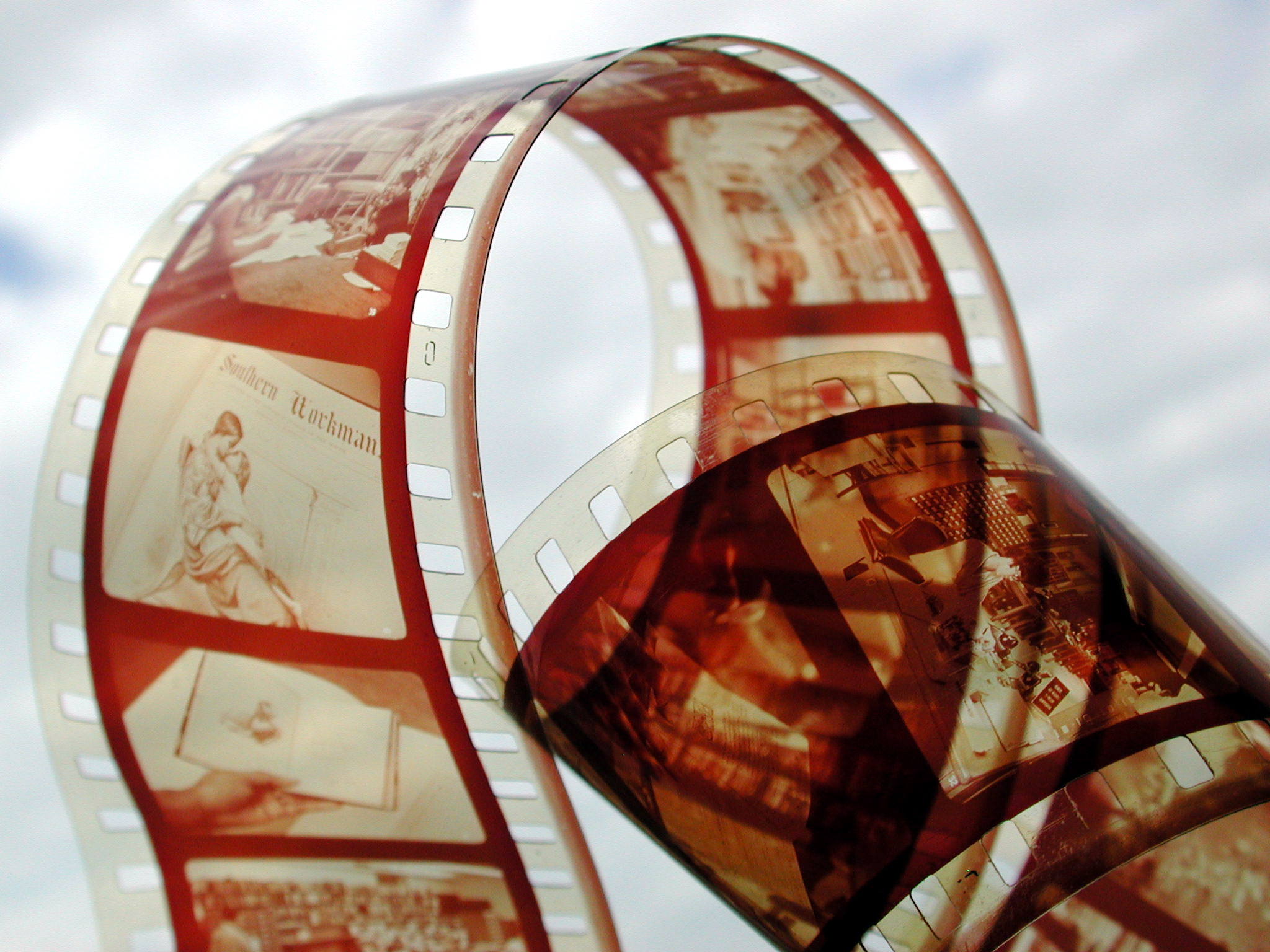
A debate is raging in the film world about the merits of shooting movies on 35mm film versus digital cameras. In one corner are those who believe digital's practical and economic benefits make it impossible to resist, informs AFP. In the other, "purists" such as Tarantino and "The Dark Knight Rises" director Christopher Nolan who cherish the visual "texture" of 35mm and warn that something important is being lost. "The fact that most films now are not presented in 35mm means that the war is lost," Tarantino told the Cannes Film Festival last month, describing digital projections as "just television in public". "Apparently the whole world is OK with television in public - but what I knew as cinema is dead!" the "Pulp Fiction" and "Kill Bill" director said. JJ Abrams, another celluloid devotee, who has just started shooting the new "Star Wars" movie, has also warned that without 35mm "the standard for the highest, best quality" will be lost. Nolan, meanwhile, predicts that studios will allow 35mm to completely disappear unless directors insist on it. Alain Roulleau, whose family has run Paris's oldest cinema since 1948, however, dismisses all this as "nostalgia" - and points out that most studios have already stopped supplying films in 35mm. Located on the slopes of Montmartre, Paris's old artists' quarter, Studio 28 with its Jean Cocteau-designed lamps and painted red steps, has old-world charm in buckets. In the projection room, though, Roulleau has made sure this small independent cinema is bang up to date. Roulleau took the decision to install digital projection equipment four years ago and admits he "almost cried" when he saw the quality of the first digital images, which he described as "very icy, too perfect, with no atmosphere". Fortunately, he says, since then the quality has seen constant improvements and in the past year he has shown only two films in 35mm. "When you have a 35mm print, when the print is quite new the image is perfect, but after two weeks in a theatre you have little dark spots on the screen from the dust," he told AFP. "With digital, from the first screening to the last, six months later, it's the same quality of image," he said. Others stress that even movies shot in 35mm are now quickly converted to digital for distribution and that the real clincher is the impact on the studios' bottom line. Printing just one film on 35mm film and delivering it to the cinema where it will be shown can cost $1,500 alone - compared to $150 for digital. With a copy needed for each of several thousand cinemas, it is easy to see why digital seems to have won the day. Patrick DiRenna, founder of the New York-based Digital Film Academy, called the shift to digital a natural evolution, adding that the lower start-up costs were allowing new voices to be heard. "The cameras are now almost completely there. The only thing that's lacking at this point is a slight level of picture quality, but that will change and in exchange we have democratization with artists who are now really able to do their work," he said. Shooting a film on a digital camera, he said, was like "sculpting in clay not marble" with directors able to keep reshaping until "you get to where you need to go". And he predicted that Tarantino too would eventually be won round. "Great artists like Quentin Tarantino are generally uncomfortable when they come across something new," DiRenna said. "Charlie Chaplin's discomfort with talkies is a perfect example - but when he finally made the adjustment, he turned around and made the 'The Great Dictator' and his mastery showed through again," he said. For now, however, Tarantino shows no sign of wavering. In Cannes, he added that he viewed the current generation of film-makers as a lost cause and lived in hope that 35mm could make a comeback. "I'm hopeful that we're going through a woozy, romantic period with the ease of digital," he said. "While this generation is completely hopeless, (I hope) that the next generation that will come up will demand the real thing -- in the way that after 20 years, albums are slowly coming back." Source: Voice Of Russia, Reference-Image: https://upload.wikimedia.org
|
In our digital world, are young people losing the ability to read emotions? (2015-04-28T21:47:00+05:30)

Children's social skills may be declining as they have less time for face-to-face interaction due to their increased use of digital media, according to a psychological study by the University of California, Los Angeles (UCLA).
UCLA scientists found that sixth-graders who went five days without even glancing at a smartphone, television or other digital screen did substantially better at reading human emotions than sixth-graders from the same school who continued to spend hours each day looking at their electronic devices. “Many people are looking at the benefits of digital media in education, and not many are looking at the costs,” said Patricia Greenfield, a distinguished professor of psychology at UCLA College and senior author of the study. “Decreased sensitivity to emotional cues — losing the ability to understand the emotions of other people — is one of the costs. The displacement of in-person social interaction by screen interaction seems to be reducing social skills.” Researchers studied two sets of sixth-graders from a Southern California public school: 51 who lived together for five days at the Pali Institute, a nature and science camp about 70 miles east of Los Angeles, and 54 others from the same school. The camp doesn’t allow students to use electronic devices — a policy that many students found to be challenging for the first couple of days. Most adapted quickly, however, according to camp counsellors. At the beginning and end of the study, both groups were evaluated on their ability to recognise people’s emotions in photos and videos. The students were shown 48 pictures of faces that were happy, sad, angry or scared, and asked to identify their feelings. They also watched videos of actors interacting with one another and were instructed to describe the characters’ emotions. In one scene, students take a test and submit it to a teacher; one of the students is confident and excited, the other is anxious. In another scene, one student is saddened after being excluded from a conversation. The children who had been at the nature camp improved significantly over the five days in their ability to read facial emotions and other non-verbal cues to emotion, compared with the students who continued to use their media devices. Researchers tracked how many errors the students made when attempting to identify the emotions in the photos and videos. When analysing photos, for example, those at the camp made an average of 9.41 errors at the end of the study, down from 14.02 at the beginning. The students who didn’t attend the camp recorded a significantly smaller change. For the videos, the students who went to camp improved significantly, while the scores of the students who did not attend camp showed no change. The findings applied equally to both boys and girls. “You can’t learn non-verbal emotional cues from a screen in the way you can learn it from face-to-face communication,” said Yalda Uhls, lead author and senior researcher with the UCLA’s Children’s Digital Media Center, Los Angeles. “If you’re not practicing face-to-face communication, you could be losing important social skills.” Students participating in the study reported that they text, watch television and play video games for an average of four-and-a-half hours on a typical school day. Some surveys have found that the figure is even higher nationally. Greenfield considers the results significant, given that they occurred after only five days. The implications of the research are that people need more face-to-face interaction — and that even when people use digital media for social interaction, they’re spending less time developing social skills and learning to read non-verbal cues. “We’ve shown a model of what more face-to-face interaction can do,” Greenfield said. “Social interaction is needed to develop skills in understanding the emotions of other people.” Emoticons are a poor substitute for face-to-face communication, Uhls concluded: “We are social creatures. We need device-free time.” The research will appear in the October print edition of Computers in Human Behavior and is already. published online, Source: futuretimeline.net
|
Sony MAX and SIX give Indians a reason to celebrate with India ka tyohaar (2015-04-27T19:17:00+05:30)

Wednesday: 11-March-2015: Sony MAX and SIX, the official broadcasters of the Pepsi Indian Premier League (PEPSI IPL) give its viewers a reason to cheer by launching the biggest campaign of the year – “Ismein Hai Dilon Ka Pyaar….Ye Hai India ka tyohaar”. As the name suggests, the campaign aims to connect hearts, connect lives, creating a national euphoria and strengthening emotional affinity towards the sport. ‘India ka tyohaar’ invites people to break their differences and join in the revelry which is aptly communicated through a heart shaped mnemonic that exudes the ‘spirit of togetherness’ this season of Pepsi IPL 2015. The campaign kicked off with a series of 3 prequels set in distinct situations of people’s life, ending with the common messaging of ‘India ka Tyohaar’. The films leave viewers with intriguing thoughts of preparation towards the year’s grandest tournament. Sony MAX & SIX have roped in the renowned musical duo - Salim-Sulaiman to compose the anthem for this magnanimous tournament. The Anthem with words like “dooriyan chod kar…dil se dil jod kar”, stirs up warm emotions that encourages viewers to come together and transcend all barriers to rejoice this season of Pepsi IPL. With a peppy and feet tapping rhythm the music will surely get the nation to groove in the spirit of festivity. Directed by Anupam Mishra of Crazy Few Films and conceptualised by DDB Mudra, the films brings alive the excitement that Pepsi IPL brings year on year and promises another year of fervour and celebration. Speaking about India ka Tyohaar, Mr. Neeraj Vyas, Senior EVP & Business Head, SONY MAX said, “‘Pepsi IPL reaches out to people across age groups, gender and languages. This year’s initiative “India ka tyohaar” is a unique thought that stems from the insight of how Pepsi IPL over the years has grown to be a huge festival which people celebrate together. It is a perfect blend of cricket, entertainment and festivity packaged in one”. Known to redefine the music of Bollywood with their unique style, Salim-Sulaiman hope to get everyone to dance to the anthem of Pepsi IPL 2015. Extremely overwhelmed with the opportunity to compose the anthem, they said, “With Pepsi IPL that reflects the fervour of the nation and an idea as powerful as ‘India Ka Tyohaar’, we tried to create a song which is very Indian in its spirit but yet has the sound of 'The Now'. Once we had the lyrics we composed the tune and created a rhythm around it which is the beat of our folk music and festivals all across India. The song is infectious! We hope the audiences will celebrate the music and this festive spirit of the Pepsi IPL across the globe.” The much acclaimed ad man & Mudra DDB chairman, Sonal Dabral said “If Cricket is a religion in India; Pepsi IPL is it's only true festival. Unlike any other sporting event in the world, it’s a microcosm of the passion, fervour and madness that envelops our country whenever cricket is played, uniting hearts and minds in its wake. And unlike any other festival in India, this is one festival that every Indian celebrates. It's got the colours of Holi, the festivity of Diwali, the brotherhood of Eid and the joy of X-mas. What else can you call it but one amazing 'India Ka Tyohaar'? It's been a privilege and an honour to create this big idea for Pepsi IPL. Here's to Sony! Here's to India Ka Tyohaar!" Stretching across a 4 week period till the launch of the tournament, the Pepsi IPL 2015 campaign will have a complete 360 degree rollout across mass media. The communication will be seen by viewers across mediums like television, print, radio, digital, outdoor, on-ground, mobile, BTL and out of home. Source: page3bollywood.com


 |


South Africa “abandons” digital plan (2015-04-07T00:25:00+05:30)

By Chris Forrester: South Africa’s communications minister, Faith Muthambi has said in an official statement that the government has decided to abandon the digital migration project. The move, described by local press as “shocking”, has completely caught the broadcasting industry off guard, and they had been working to a mid-year analogue switch off. “Seeing that none of our neighbouring countries has switched over to digital television, we have taken a decision to ignore the 17 June 2015 ITU deadline and remain with analogue television for the foreseeable future,” Muthambi said. “The government will save billions that can be used in better ways, like funding [public broadcaster] SABC.” The upside for South Africa’s cash-strapped government is that they no longer need to subsidise set-top boxes for the nation’s poorest citizens. This is also a loss for Nagra Kudelski which had won the contract to encrypt and protect transmissions for Sentech, the official transmission company. “This solves the debate — there won’t be any set-top boxes and so there is no need for encryption,” she added. Source: Article, Image: pixabay.com under Creative Commons CC0.
|

Mexico’s 2.8m digital TV give away (2015-04-06T23:59:00+05:30)

By Chris Forrester: Mexico’s Federal Telecommunications Institute (IFT) says it has distributed some 2.8 million digital TVs to poorer families as part of the nation’s commitment to convert from analogue to digital TV. The government says it will subsidise a total of 13 million TVs and set-top converter boxes as part of the scheme. The IFT says that it will be announcing new tenders for the supply of these sets and boxes in the next few days. Analogue broadcasting will cease by Dec 31st this year and the reduced costs receivers must be in place by November 15. Source: Article, Image: flickr.com
|
Online TV, video $35bn revenues by 2018 (2013-10-29T01:13:00+05:30)

Global online TV and video revenues (over fixed broadband networks) will reach $34.99 billion in 2018, a massive increase from the $3.98 billion recorded in 2010 and the $15.94 billion expected in 2013, according to the Online TV and Video Forecasts report from Digital TV Research. By 2018, 520 million homes in 40 countries will watch online television and video (both paid-for and ad-supported), up from 182 million in 2010. Simon Murray, Principal Analyst at Digital TV Research, said that the OTT TV sector was on the brink of a “huge” take-off as the key players expand internationally, broadband penetration increases, technology advances and as new partnerships are announced on a daily basis. Online TV and video advertising has been the key driver for the OTT sector, with revenues of $7.4 billion expected in 2013, up from $2.4 billion in 2010. Rapid advertising expenditure growth will continue, to reach a global total of $16.4 billion in 2018. However, advertising’s share of total OTT revenues will fall from 60.6 per cent in 2010 to 46.9 per cent in 2018. According to Digital TV Research, the fastest growing paid-for OTT revenue stream will be subscription services. Although the likes of Netflix and Hulu Plus are already reasonably well established as streaming subscription services in North America, international markets have been relatively untouched – until now. Online television and video subscription revenues (SVOD) are predicted to soar from $1 billion in 2010 to $6 billion in 2013 and onto $13 billion in 2018. The number of homes paying a monthly fee to receive SVoD packages will climb from 21.9 million in 2010 to 67.8 million by end-2013 and onto 160.6 million in 2018. The move towards subscription services will stifle the pay-per-view or rental market somewhat as they provide similar consumer propositions. However, online TV and video rental/pay-per-view revenues will still expand rapidly, climbing from $207 million in 2010 to $2,103 million in 2018. The fast take-up of subscription services will also adversely affect download-to-own buying patterns. However, DTO (download-to-own) revenues are forecast to be $3,506 million in 2018, up from $330 million in 2010. Source: Advanced Television, Image: wikimedia.org
|